Colored Concrete That Holds Up to Twin Cities Winters
Plain gray slabs don't have to be the default. Colored concrete gives your patio, driveway, or walkway a finished, intentional look — without the texture of stamping. Jensen Decorative Concrete has been mixing, pouring, and sealing colored concrete across the western suburbs for 25 years.
What Is Colored Concrete?
Colored concrete is standard concrete with pigment added — either mixed into the batch before pouring or applied to the finished surface. The result is a smooth, uniform-toned slab that looks clean and deliberate without the texture of stamped patterns.
Several methods exist depending on timing. Integral color and color hardener go in during the pour. Acid stains, water-based stains, and dyes can be applied to cured concrete — including existing slabs. Derek selects the right method based on your surface condition, color goals, and how the area will be used.
- Adds permanent color without altering the surface texture
- Works on both new pours and existing concrete in good condition
- Pairs with broom finish, smooth trowel, or exposed aggregate for different looks
- Resists fading when sealed and maintained on a 2-3 year cycle
Colored Concrete Methods Catalog
Each coloring technique produces a different effect — from uniform solid tones to mottled, variegated finishes.
Integral Color
Pigment blended into the concrete mix at the batch plant. Produces a consistent, through-body color.
Color Hardener
Dry-shake pigment broadcast onto the wet surface. Richer, more concentrated color than integral alone.
Acid Stains
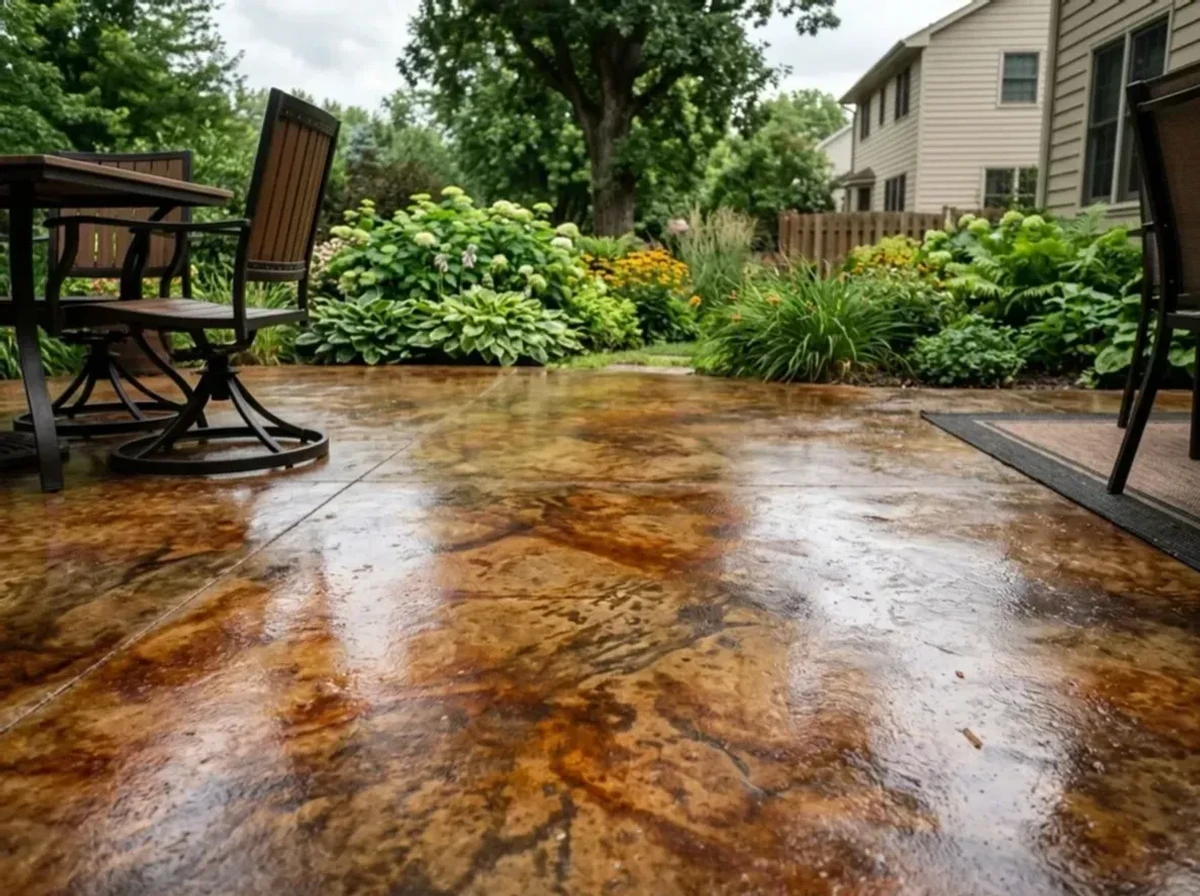
Chemical stains that react with the lime in cured concrete. Creates mottled, translucent, natural-looking tones.
Water-Based Stains & Dyes
Non-reactive pigments applied to cured concrete. Broader color range than acid stains with more predictable results.
Which Color Method Is Right for Your Project?
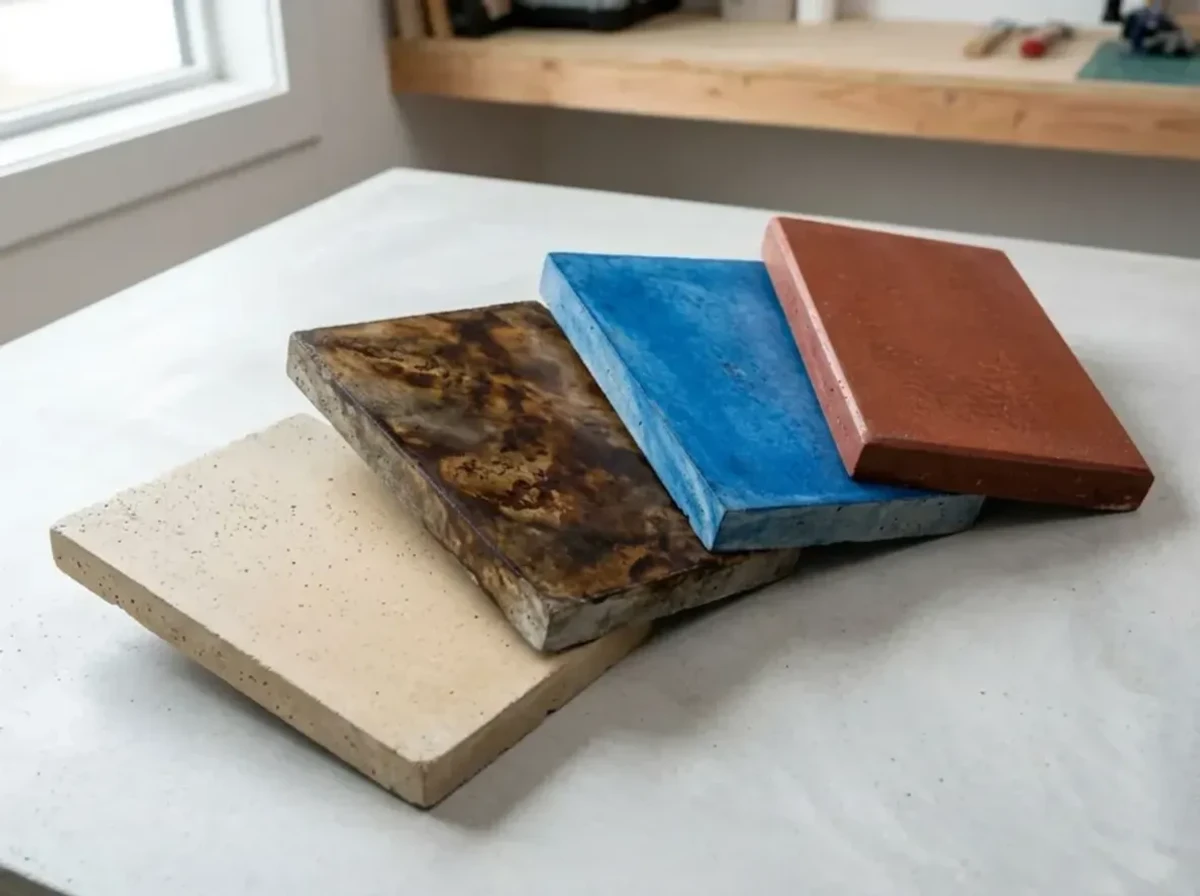
The best method depends on whether the concrete is new or existing, indoor or outdoor, and how much color variation you want. Derek walks through the options on-site with physical samples so you see actual color — not a digital approximation.
Book Free ConsultationColor Options for Colored Concrete
Getting the right color means layering the right products in the right order. Here's how each layer contributes to the final result.
Integral Color (Full-Depth Pigment)
Mixed into the entire concrete batch, integral color tints the slab all the way through. If the surface ever chips or wears, the color underneath matches. This is the foundation layer — it sets the base tone that everything else builds on. Neutral earth tones like buff, tan, and gray are the most popular in the Twin Cities.
Color Hardener (Surface Intensifier)
Applied as a dry shake to the wet surface during finishing, color hardener deepens and enriches the base tone. It also hardens the top layer, increasing abrasion resistance by up to 70% compared to untreated concrete. Driveways and high-traffic walkways benefit most from this added durability.
Stains & Dyes (Post-Cure Color)
Applied after the concrete has cured, stains and dyes open up the full color spectrum — from subtle earth tones to bold blues and greens. Acid stains create organic, mottled variation. Water-based stains produce more uniform, predictable coverage. Both work on new and existing concrete surfaces.
Sealer (Color Lock & UV Shield)
Sealer is the final step and arguably the most important for colored concrete. Without it, UV exposure fades pigments within 1-2 seasons. A quality acrylic or polyurethane sealer preserves color intensity and adds either a matte or glossy sheen depending on your preference. Reapply every 2-3 years in the Twin Cities climate.
Colored Concrete Applications
Anywhere you'd pour concrete, you can add color — here are the most common residential uses.
Patios
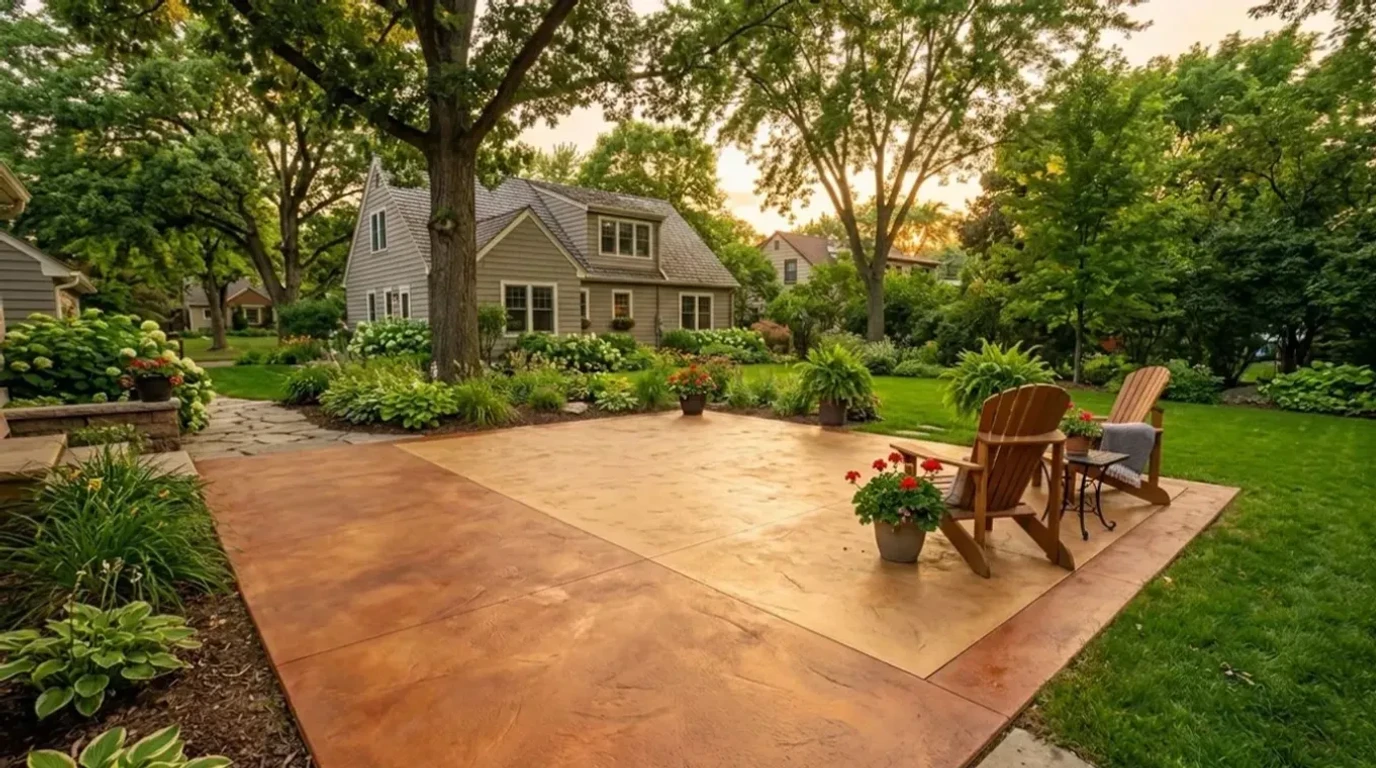
A smooth, colored patio in sandstone or charcoal creates a clean backdrop for outdoor furniture and plantings. Without stamp texture, the surface stays easy to sweep, arrange furniture on, and shovel in winter.
Integral buff with broom finish, charcoal with smooth trowel
Driveways
A colored driveway stands out on the block without the maintenance demands of pavers. Color hardener adds surface strength that holds up to tire wear and salt exposure.
Charcoal integral color with color hardener, slate gray
Sidewalks & Walkways
Colored sidewalks tie the front of the house together — matching or complementing the driveway and front entry. Consistent color from driveway to front door creates curb appeal that plain gray can't match.
Matching driveway color, contrasting border band
Garage Floors
Garage floors take heavy abuse — road salt, oil drips, hot tires. Acid staining or water-based dyes paired with an epoxy or polyurethane sealer create a surface that resists staining and cleans up with a hose.
Acid stain in Cola or Aged Leather, high-gloss sealer
Pool Decks
Light-toned colored concrete keeps surface temperature lower on bare feet during summer. A broom or knockdown finish adds slip resistance around the water.
Light buff integral color, broom finish, matte sealer
Colored Concrete vs. Stained Concrete vs. Painted Concrete
| Feature | Colored (Integral) | Stained | Painted |
|---|---|---|---|
| Lifespan | 25-30+ years | 10-20 years | 2-5 years |
| Maintenance | Reseal every 2-3 yrs | Reseal every 2-3 yrs | Repaint every 2-3 yrs |
| Install Time | Done during pour | 1-2 days on cured | 1 day on cured |
| Cost | $$ | $$ | $ |
Integral colored concrete lasts the longest because the pigment goes through the entire slab. Staining works well for existing concrete in good condition. Paint is the cheapest option but peels and flakes within a few years, especially under Minnesota's freeze-thaw cycles.
Colored Concrete Gallery
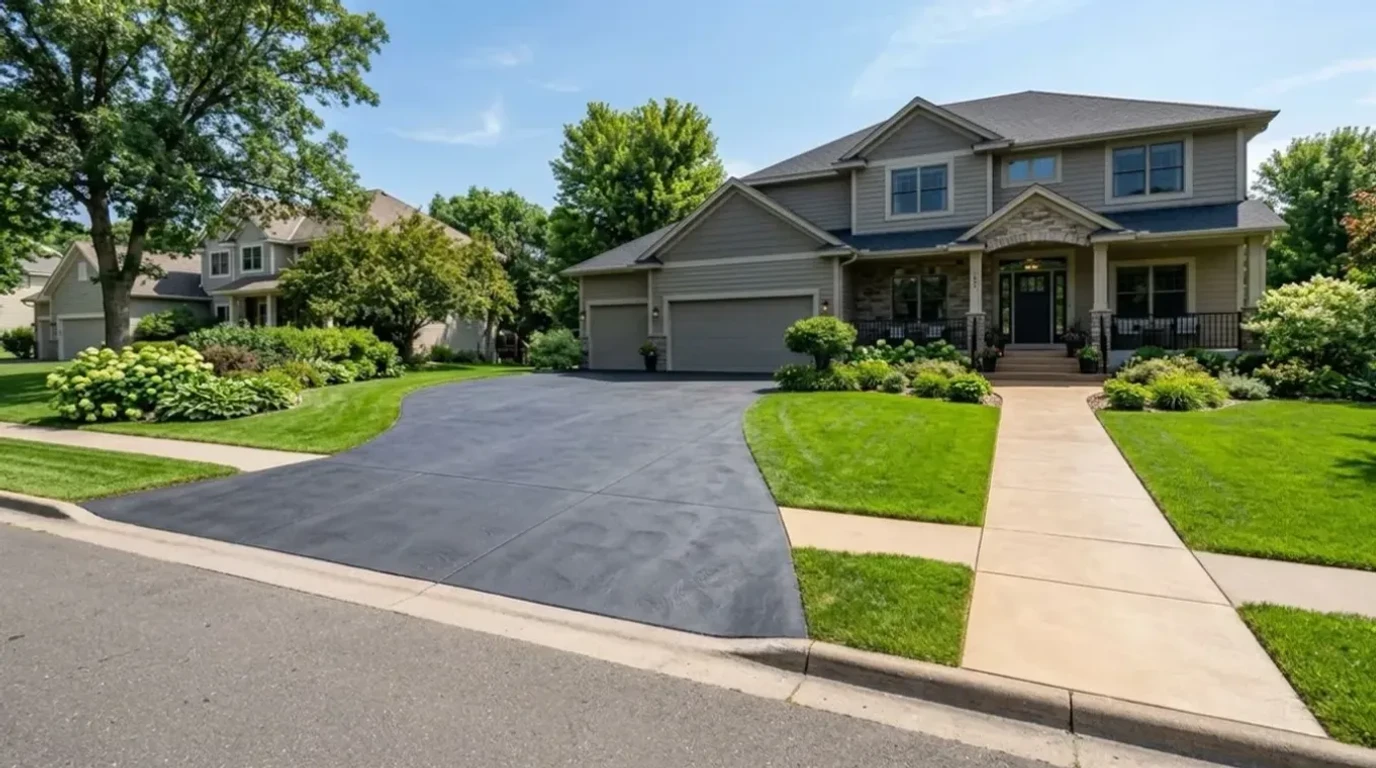
Minnetonka, MN
Eden Prairie, MN
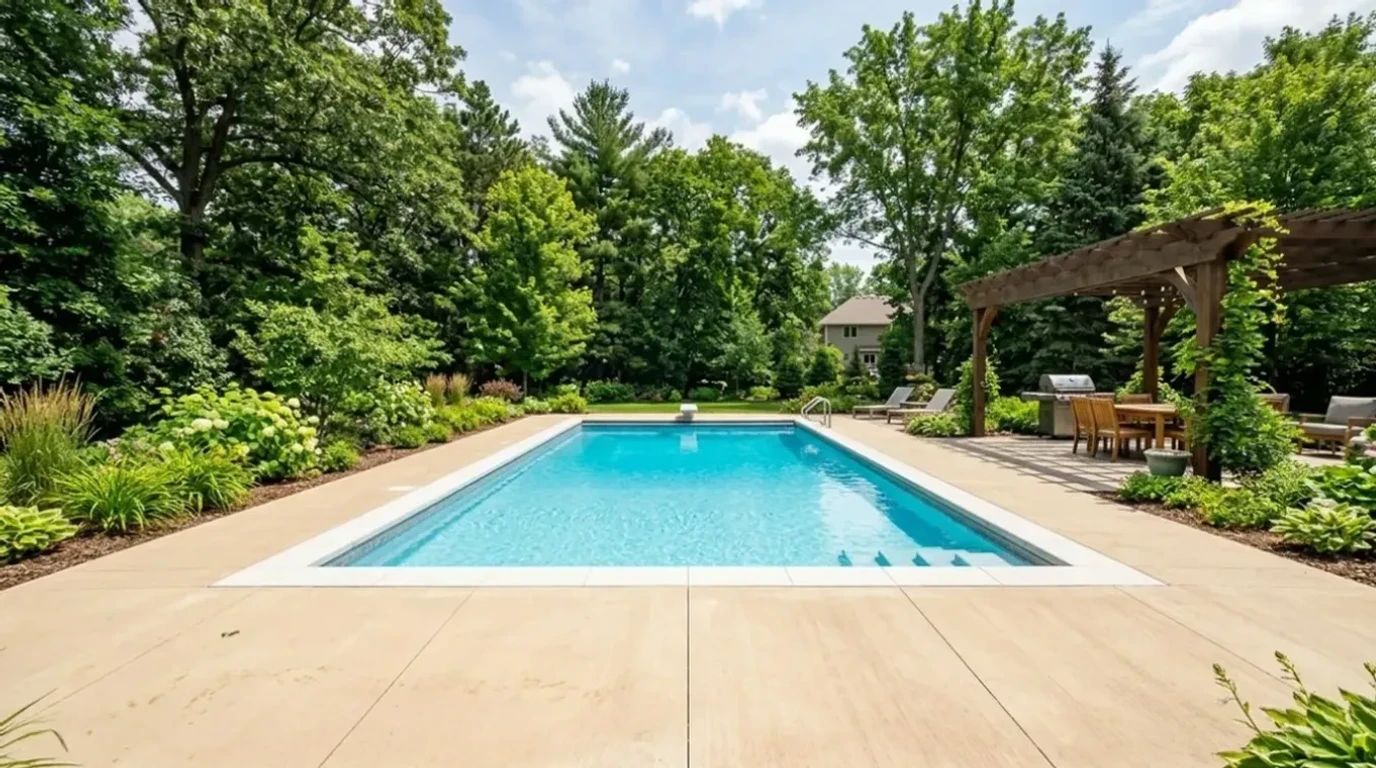
Shorewood, MN
Colored Concrete Maintenance
Colored concrete stays vibrant with consistent sealing and a few seasonal habits.
Reseal on a 2-3 Year Cycle
Sealer is the barrier between your color and Minnesota's UV, moisture, and salt. A fresh coat of acrylic sealer every 2-3 years keeps the surface looking like the day it was poured.
Keep It Clean
Leaf stains, mud, and standing water can discolor the surface over time. A garden hose and mild detergent handle most surface dirt. Wipe up oil and chemical spills promptly.
Use the Right De-Icer
Sodium chloride (rock salt) accelerates surface scaling. Calcium chloride or sand provides traction without the chemical damage. Skip de-icers entirely during the first winter.
Watch for Sealer Wear Patterns
High-traffic zones will wear through sealer faster than edges and corners. If you notice color looking dull or chalky in specific spots, it's time to reseal.
Why Jensen Decorative Concrete for Colored Concrete
Color work demands precision — the wrong ratio, bad timing, or inconsistent application shows immediately and permanently.
Decorative Is What Derek Does Every Day
75% of Jensen's work is decorative concrete. Color mixing, hardener application, stain timing — these are daily skills, not occasional add-ons. That repetition means consistent results across different weather conditions, concrete mixes, and color products.
On-Site Color Matching, Not Guesswork
Derek brings physical color sample boards to your property. You see actual pigment against your siding, stone, and landscaping — in your home's natural light. Digital color swatches on a phone screen don't account for how sunlight, shade, and surrounding materials change the way a color reads.
One Crew, One Pour, One Standard
With a five-person crew handling one job at a time, there's no hand-off between the sales team and the install crew. Derek manages color consistency from the batch plant order through the final seal coat.
Built for Minnesota Conditions
Air entrainment, proper cure time, and sealer selection all change based on Minnesota's temperature and humidity swings. Derek has poured colored concrete through 11 Minnesota seasons — he adjusts the process for a 50-degree April morning differently than an 85-degree July afternoon.
Colored Concrete FAQ
What's the difference between integral color and concrete stain?
Integral color is mixed into the concrete before the pour — it tints the entire slab from top to bottom. Concrete stain is applied to the surface of cured concrete, penetrating the top layer but not coloring the full depth. Integral color is permanent and won't wear off. Stain can fade over time and needs reapplication. For new pours, integral color is the standard choice. For existing slabs, staining is the practical option.
Will colored concrete fade over time in Minnesota?
All colored concrete will gradually lighten with UV exposure if left unsealed. A quality acrylic sealer blocks UV and locks in pigment. With resealing every 2-3 years, the color stays close to its original intensity for decades. The biggest cause of premature fading isn't sun — it's skipping sealer maintenance.
Can you color concrete that's already poured?
Yes, if the existing slab is in sound structural condition. Acid stains, water-based stains, and dyes all work on cured concrete. The slab needs to be clean, free of previous sealers or coatings, and without significant cracking or spalling. Derek evaluates the existing surface during a free consultation.
How much does colored concrete cost compared to plain gray?
Integral color adds roughly $1-3 per square foot over plain concrete. Color hardener adds another $1-2 per square foot. For a 400-square-foot patio, integral color might add $400-1,200 to the total project cost. That's a modest premium for a result that dramatically changes the look of the finished surface.
Does colored concrete require different maintenance than plain concrete?
The maintenance schedule is nearly identical — reseal every 2-3 years and avoid sodium-based de-icers. The only added consideration is that sealer failures are more visible on colored concrete because fading and discoloration show up against the pigment.
What colors work best for outdoor concrete in Minnesota?
Earth tones — buff, sandstone, charcoal, and slate gray — are the most popular in the Twin Cities area. They complement the region's brick, stone, and neutral siding palettes. Darker colors absorb more heat, which helps with snow melt but can feel hot on bare feet around pool decks. Lighter tones stay cooler and show less salt residue.
Give Your Concrete Some Color Without the Guesswork
Derek brings color sample boards directly to your home so you see the real pigment in your own light. Consultations are free, no-pressure, and include a written estimate within 24 hours.
Get Your Free EstimateQuality decorative concrete is just a call away.