Concrete Pool Deck Installation Across the Twin Cities
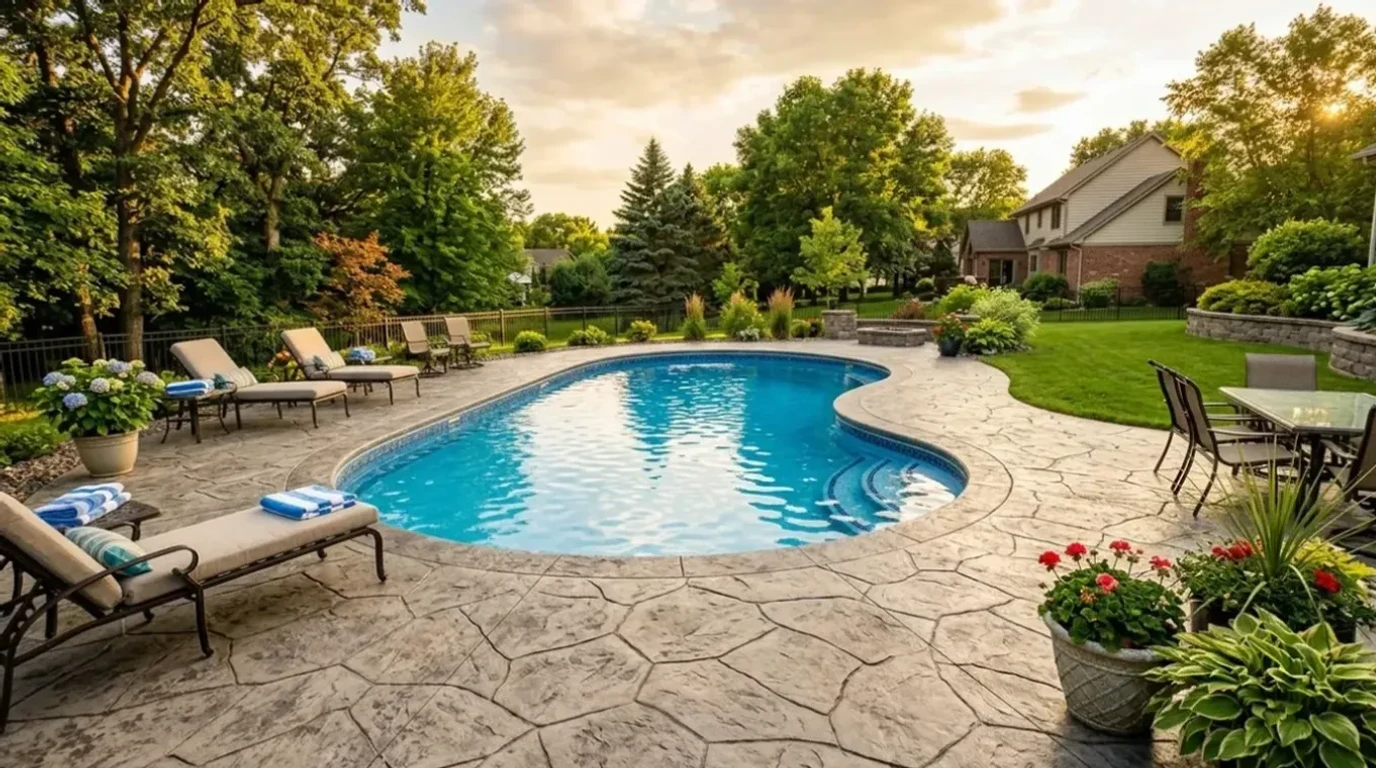
Bare feet, wet surfaces, and direct sun all summer — a pool deck has to perform under conditions most concrete never faces. Jensen Decorative Concrete builds pool decks with slip-resistant finishes, proper drainage, and the chemical resistance needed to stand up to chlorine, sunscreen, and Minnesota's freeze-thaw seasons.
How a Concrete Pool Deck Gets Built Right
A concrete pool deck is the hardscape surface surrounding your in-ground pool, above-ground pool, or hot tub. It needs to handle constant water exposure, resist slipping when wet, stay cool enough to walk on barefoot in July, and drain water away from the pool — not into it. That's a different set of demands than a patio or driveway.
Installation begins with subgrade preparation and grading to direct water toward designated drainage points. Forms are set to maintain the correct slope (typically 1/4 inch per foot away from the pool edge). The concrete is poured with air entrainment for freeze-thaw protection, and the finish is selected specifically for bare-foot traction and heat management.
Slip-Resistant Finishes
Every pool deck surface is textured for safe footing on wet concrete. Non-slip sealer additives provide additional bare-foot traction.
Proper Drainage Pitch
Water flows away from the pool and away from structures, eliminating standing puddles. Typically 1/4 inch per foot slope.
Chemical Resistance
Sealers protect against chlorine, salt (for salt-water pools), and sunscreen oils that break down unprotected concrete.
Heat Management
Light colors and cool-deck coatings reduce surface temperature by up to 30% on sunny days. Walk barefoot in comfort.
Pool Deck Finishes Built for Bare Feet and Wet Surfaces
Every finish option has to pass the same test: is it safe to walk on with bare, wet feet? Beyond that, the choice comes down to appearance, heat absorption, and budget.
Stamped Concrete with Non-Slip Textures
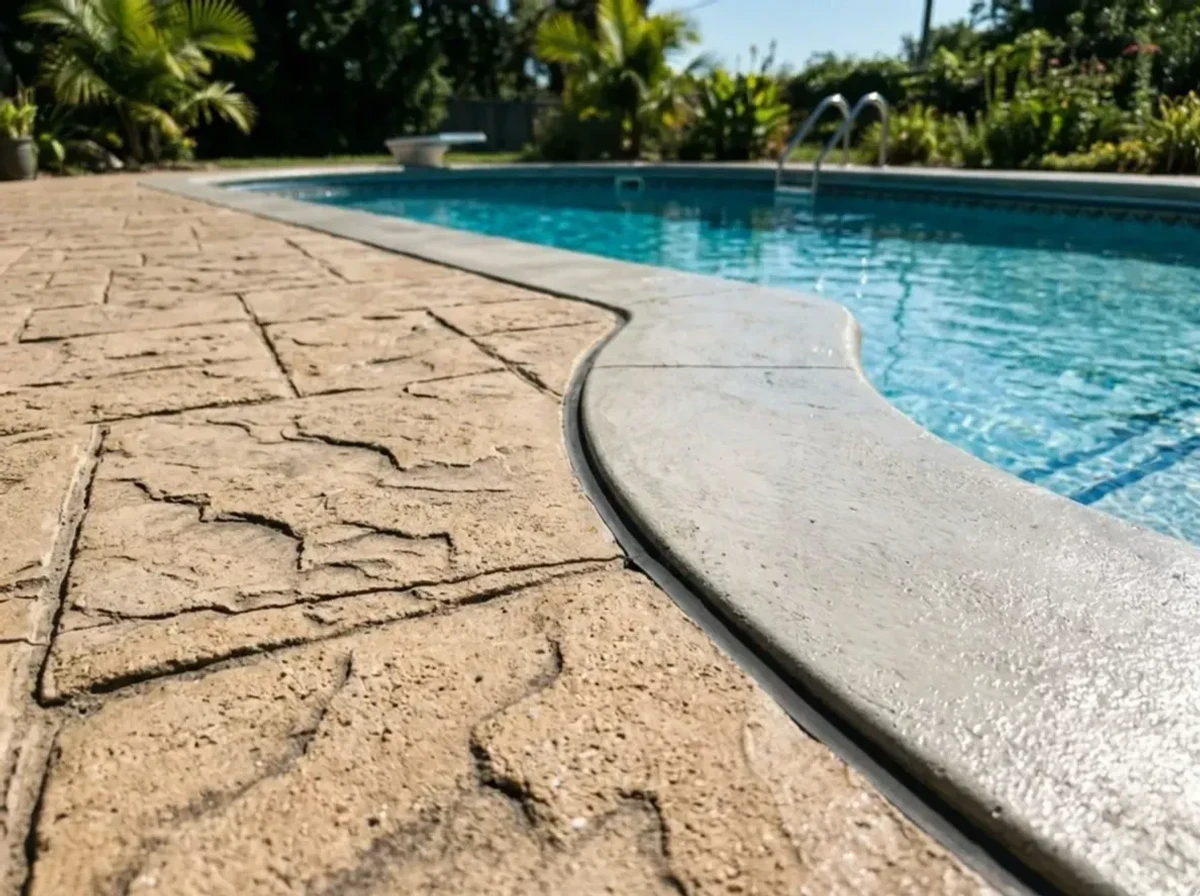
Stamped pool decks deliver a high-end look — natural stone, slate, or flagstone patterns — while maintaining the grip texture needed around water. The stamp pattern itself creates micro-texture in the surface, and we apply a non-slip additive to the sealer for additional traction.
- Natural stone appearance without natural stone maintenance
- Stamp texture provides built-in grip
- Non-slip sealer additive for additional wet-surface safety
- Wide range of patterns: Ashlar Slate, cobblestone, Roman texture
Colored Concrete Pool Decks
Integral color lets you match or complement your home's exterior, pool tile, or landscaping. Lighter colors — sandstone, buff, light gray — are strongly recommended because they absorb less heat.
- Integral color runs through the full slab depth
- Light tones reduce surface heat significantly
- Combine with stamping for a fully custom look
- UV-stable pigments resist fading from direct sun exposure
Broom Finish Pool Decks
The most cost-effective option that still provides excellent slip resistance. The directional texture created by the broom gives bare feet solid grip, and the surface drains well.
- Best slip resistance of any standard concrete finish
- Most affordable pool deck option per square foot
- Clean, uniform look that pairs well with any pool style
- Easy to maintain and reseal
Cool-Deck Coatings
Spray-applied acrylic coating that reflects solar heat and reduces surface temperature by up to 30%. An upgrade worth considering if your pool deck faces south or west and gets full afternoon sun.
- Reduces surface temperature by up to 30% vs. standard concrete
- Adds texture for additional slip resistance
- Applied over new or existing concrete surfaces
- Available in multiple colors to match your design
Pool Deck Projects
Browse completed pool deck installations across the Twin Cities west metro.
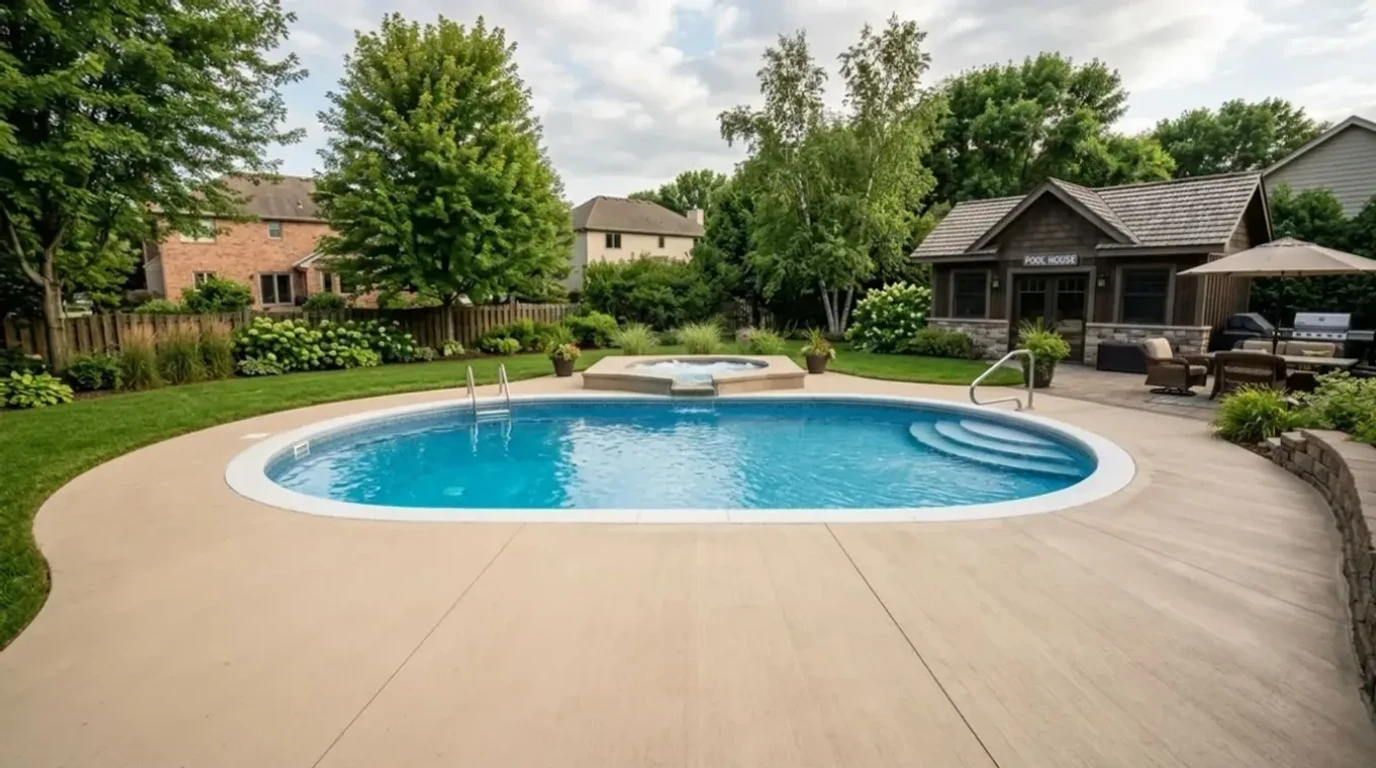
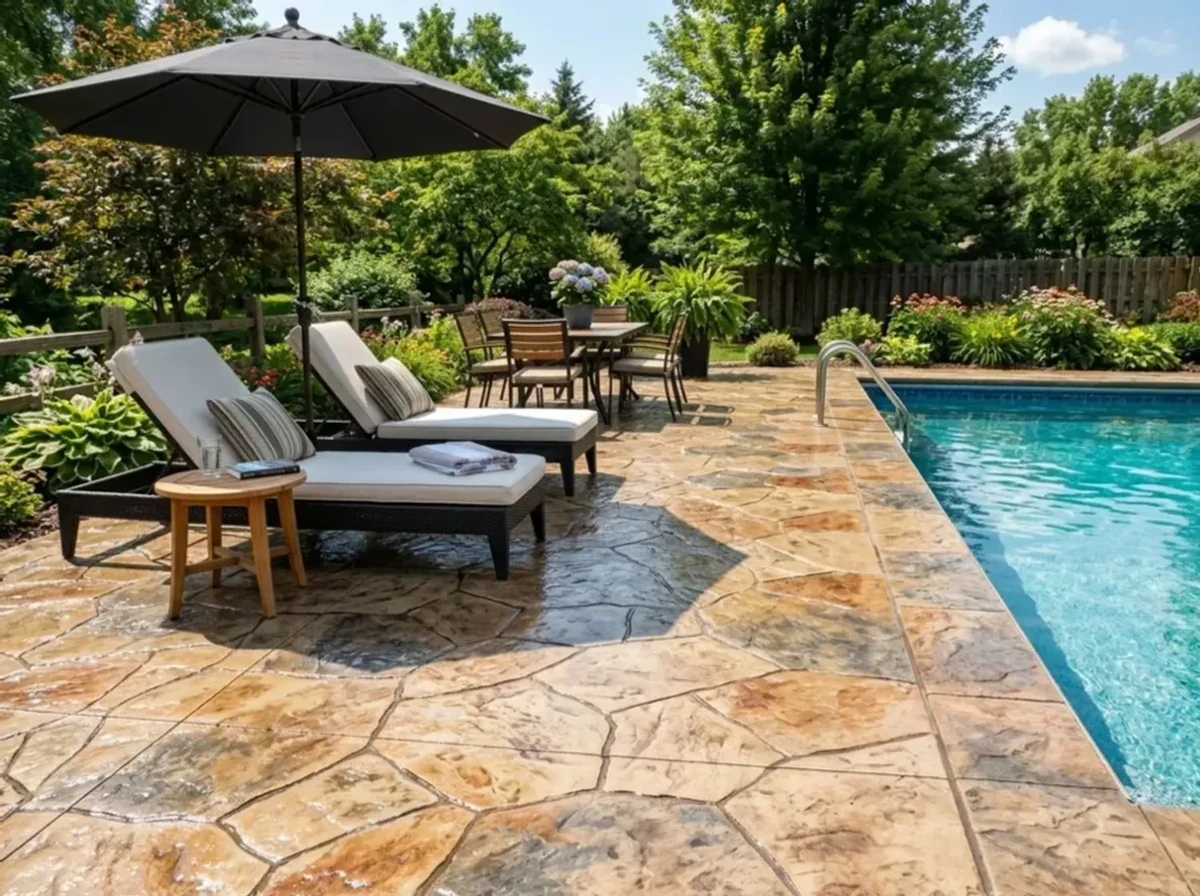
Pool Deck Applications for Every Setup
Pool Surrounds (In-Ground Pools)
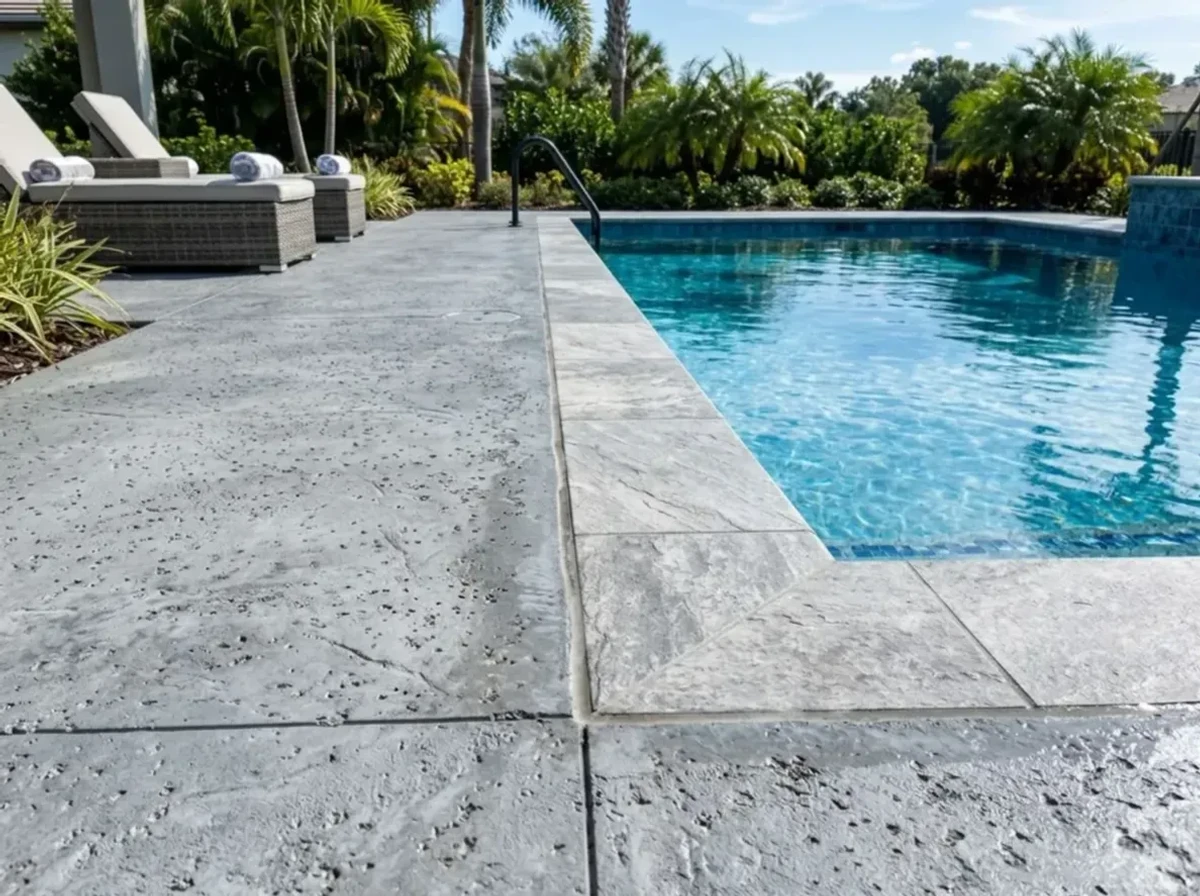
The full perimeter deck around an in-ground pool. Sizing varies from a narrow 4-foot border to 10-12 feet of usable deck space on the lounging side. Proper drainage slope, expansion joints, and a slip-resistant finish are non-negotiable for every pool surround we pour.
Hot Tub Pads
A hot tub pad needs to support 3,000-5,000 pounds on a level, stable surface. We pour hot tub pads at 6 inches thick minimum with reinforced steel, on a compacted subgrade with a safe, slip-resistant stepping area around the entire unit.
Pool House Patios
The patio surface connecting pool houses, cabanas, or outdoor kitchens to the pool deck should match in finish, color, and drainage design. We pour pool house patios as part of the overall project to ensure seamless drainage and a unified look.
Connecting Walkways
The path between your back door and the pool gets more foot traffic — much of it barefoot and wet — than almost any walkway on your property. We match the finish and drainage grade for a safe, consistent transition.
Concrete vs. Pavers vs. Wood Decking
| Feature | Concrete Pool Deck | Paver Pool Deck | Wood Decking |
|---|---|---|---|
| Installed Cost | $$ | $$$ | $$-$$$ |
| Slip Resistance (Wet) | Excellent | Moderate | Poor to Moderate |
| Chemical Resistance | High | Moderate | Low |
| Maintenance | Reseal every 2-3 years | Re-sand, re-level settled units | Stain/seal annually |
| Freeze-Thaw Durability | Excellent | Good | Fair |
| Longevity in MN | 25-30+ years | 15-20 years | 10-15 years |
Concrete pool decks offer the strongest combination of slip resistance, chemical resistance, and freeze-thaw durability for Minnesota pools. For a pool deck that performs through all seasons and stays safe all summer, concrete is the most practical choice.
Pool Deck Maintenance That Protects Your Investment
Pool decks face a tougher environment than standard patios — constant water, chlorine exposure, UV from reflected pool light, and Minnesota's freeze-thaw cycles.
Reseal Every 2 Years
Pool decks need resealing more frequently than other concrete surfaces because of constant water and chemical exposure. A quality acrylic sealer with a non-slip additive should be reapplied every 2 years — typically in late spring before pool season starts.
Rinse Chlorinated Water Regularly
Chlorinated pool water that sits on your concrete surface slowly eats into the sealer and can discolor the concrete over time. Rinse the deck with fresh water after heavy pool use and after any filter backwash.
Check Expansion Joints at the Pool Edge
The joint between your pool coping and the concrete deck is a critical waterproofing detail. Inspect this joint each spring and recaulk as needed with a flexible, pool-rated sealant.
Move Furniture Periodically
Lounge chair legs, planter pads, and anything that sits on the pool deck for extended periods can trap moisture underneath, causing localized discoloration or surface deterioration.
Why Pool Owners in the West Metro Trust Jensen
Specialized Pool Deck Experience
Pool decks aren't just patios next to water. They require specific knowledge about drainage pitch, chemical-resistant sealers, non-slip additives, expansion joint placement, and heat management. Derek Jensen has poured pool decks across Minnetonka, Shorewood, Orono, and Eden Prairie.
Owner-Supervised From Excavation to Final Seal
Derek is on your job site for the entire project. The slope, the finish texture, the joint placement, the sealer application — every detail that affects your pool deck's safety and longevity is checked by the same person who designed the project with you.
Built for Minnesota's Full Calendar
Your pool deck has to survive a Minnesota winter before it gets used again in summer. Air entrainment, proper curing, and the right sealer make the difference between a pool deck that comes through spring in good shape and one that spalls and flakes after one winter.
Property-Conscious Installation
Pool areas often have mature landscaping, established lawns, and expensive hardscaping already in place. Derek's crew protects adjacent surfaces during excavation and pours, and cleans up thoroughly after.
Pool Deck Questions We Hear Most
Is stamped concrete slippery when wet around a pool?
Stamped concrete has inherent texture from the stamp pattern itself, which provides more grip than a smooth surface. On top of that, we add a non-slip additive (aluminum oxide or polymer grit) to the sealer coat. The combination of stamp texture plus non-slip sealer creates a surface that's safe for bare feet, even when wet.
How does chlorine affect a concrete pool deck?
Chlorinated water that's allowed to sit on unsealed concrete will slowly etch the surface and cause discoloration over time. A properly sealed pool deck resists chlorine penetration. The key is maintaining that sealer — reapplication every 2 years keeps the barrier intact.
How often does a pool deck need resealing?
Every 2 years for pool decks. Standard patios and walkways can go 2-3 years between resealing, but the constant water exposure and chemical contact around a pool breaks down sealer faster. We apply the first sealer coat as part of the installation.
Can you resurface my existing concrete pool deck?
It depends on the condition. If the existing slab is structurally sound — no major heaving, no significant settling, no deep cracks — a resurfacing overlay or coating can renew the surface. If the slab has structural problems, removal and replacement is the better long-term investment.
What are the best stamp patterns for pool areas?
Patterns with deeper texture provide better slip resistance and work best around pools. Ashlar Slate and natural stone patterns are our most popular pool deck choices because the texture mimics real stone and provides grip. Smooth-faced patterns aren't recommended because they reduce traction when wet.
Does a concrete pool deck get too hot in summer?
Standard gray or light-colored concrete stays reasonably comfortable. Dark colors can reach 140+ degrees in direct July sun. For pool decks, we recommend lighter colors (sandstone, buff, light gray) and offer cool-deck coatings that reduce surface temperature by up to 30%.
Pool Deck Installation Across the Twin Cities
Jensen Decorative Concrete serves homeowners within roughly 60 minutes of our Cologne, MN shop — covering most of the western and southwestern Twin Cities metro.
Don't see your city listed? Call (952) 210-2692 — if you're within a reasonable drive, Derek will make it work.
Your Pool Deck Should Be the Safest Surface in Your Backyard
Between wet feet, chlorine, summer heat, and Minnesota winters, a pool deck works harder than any other concrete surface on your property. Jensen Decorative Concrete has been building pool decks across the Twin Cities west metro for 25 years. Let's plan your project.
Get Your Free EstimateQuality decorative concrete is just a call away.