
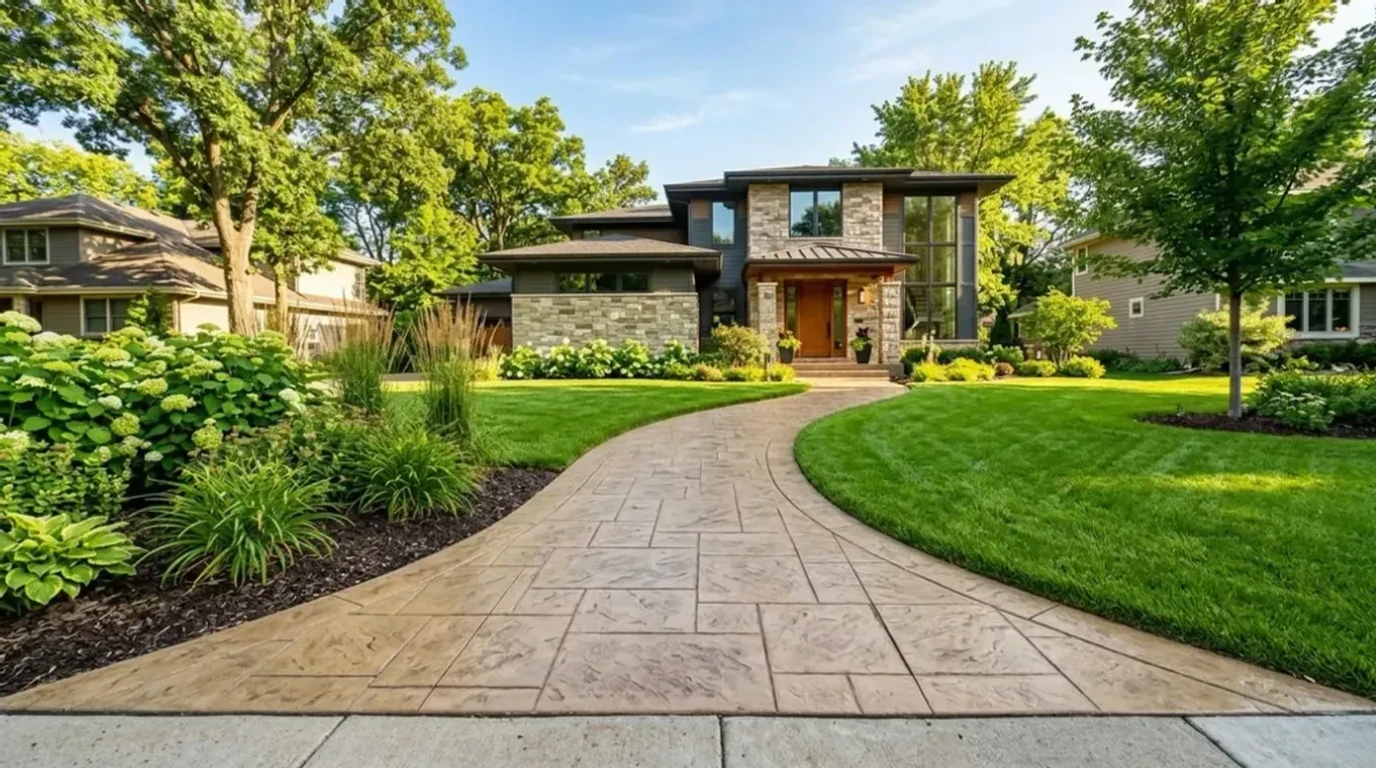
Concrete Sidewalk & Walkway Services in the Twin Cities Metro
A cracked, uneven walkway does more than look bad — it's a trip hazard every time you step outside. Jensen Decorative Concrete builds sidewalks and walkways that hold up to Minnesota's freeze-thaw cycles, from simple broom-finish paths to fully stamped and colored designs.
What Goes Into a Concrete Walkway That Lasts?
A concrete walkway is a poured-in-place path connecting your home's entry, garage, garden, or side yard. Unlike pavers that shift and settle, a properly poured concrete walkway creates a single, stable surface that handles foot traffic, wheelbarrows, and snowblowers without buckling or separating at joints.
Installation starts with excavation and subgrade compaction — especially important in the clay-heavy soils around Minnetonka, Chanhassen, and Waconia. Forms are set to the correct grade and pitch for drainage, reinforcement is placed, and the concrete is poured with proper air entrainment for Minnesota winters.
- Freeze-thaw durability — Air-entrained concrete and proper joint spacing prevent surface cracking
- Custom width and layout — Paths sized to your property, not forced into a template
- Drainage control — Every walkway is graded to move water away from your foundation
- Low lifetime maintenance — Periodic sealing is all that's needed
Walkway Finishes and Styles for Every Property
Not every walkway needs to be decorative, and not every path needs to be plain. The right finish depends on where the walkway goes, how much traffic it handles, and how you want it to look next to your home.
Broom Finish Walkways
The standard for durability and traction. A broom-finish surface provides reliable grip in wet and icy conditions — practical for side-yard paths, utility walkways, and any stretch that connects your house to a garage or shed.
- Standard residential walkway finish
- Excellent slip resistance in rain and snow
- Most cost-effective option per square foot
- Clean, uniform appearance
Stamped Concrete Walkways
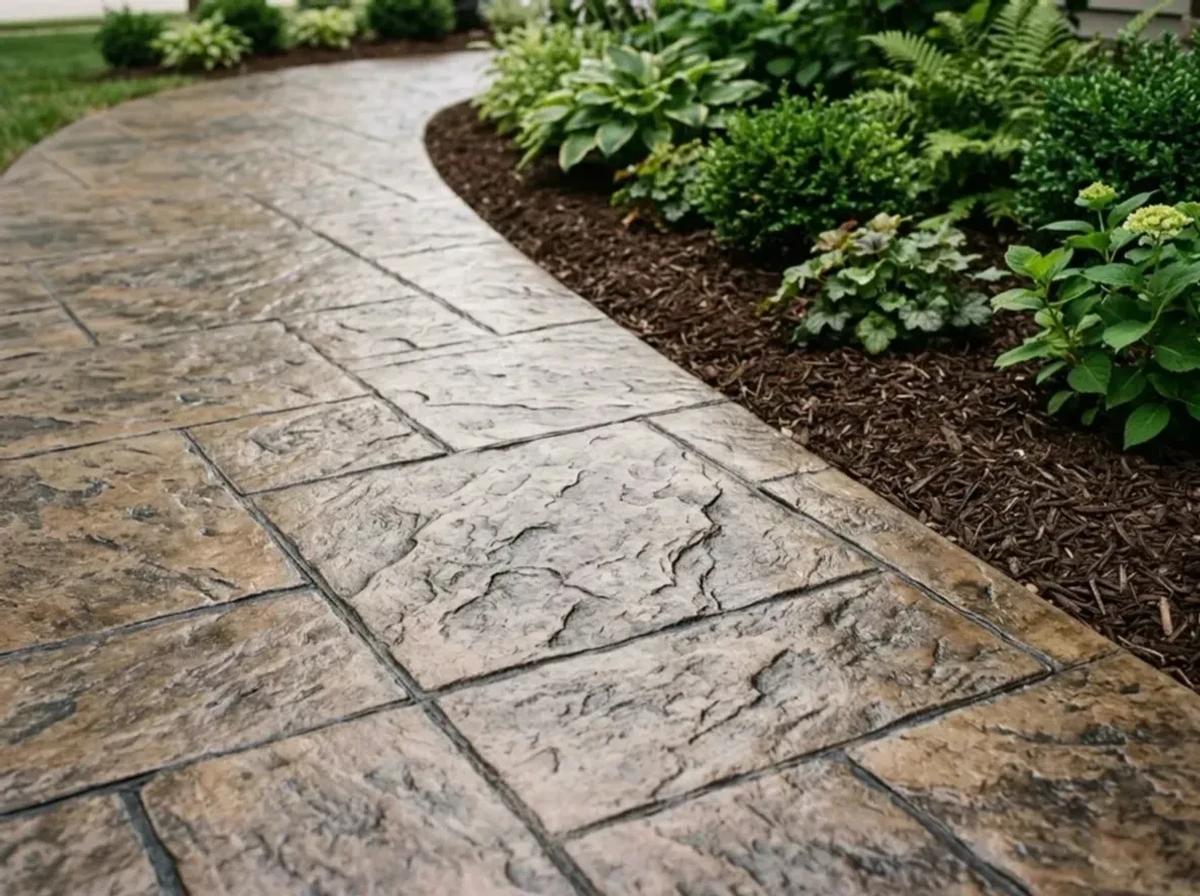
Stamped walkways replicate the look of natural stone, brick, or slate at a fraction of the cost. Patterns like Ashlar Slate, Royal Ashlar, and cobblestone are popular choices in Shorewood, Wayzata, and Orono where homes demand a finished look from the street to the front door.
- Wide selection of stamp patterns available
- Pairs with integral or accent color for a natural stone appearance
- Single monolithic pour — no shifting or settling
- Ideal for front entry walkways and garden paths
Colored Concrete Walkways
Integral color is mixed directly into the concrete, so the hue runs through the full depth of the slab — not just the surface. This means chips and wear don't reveal gray underneath.
- Color runs through the entire slab thickness
- Available in earth tones, grays, tans, and custom blends
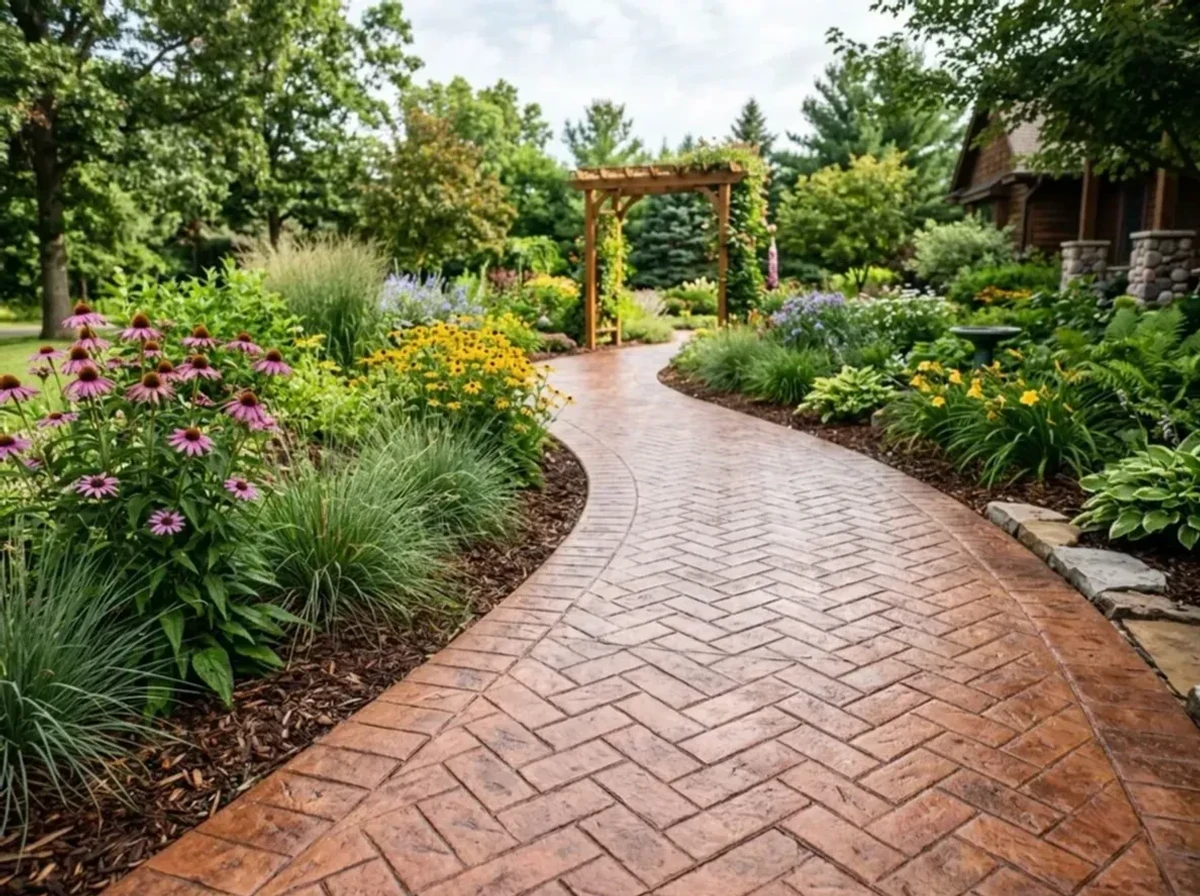
- Combine with stamping for a fully decorative walkway
- UV-stable pigments resist fading in direct sun
Exposed Aggregate Walkways
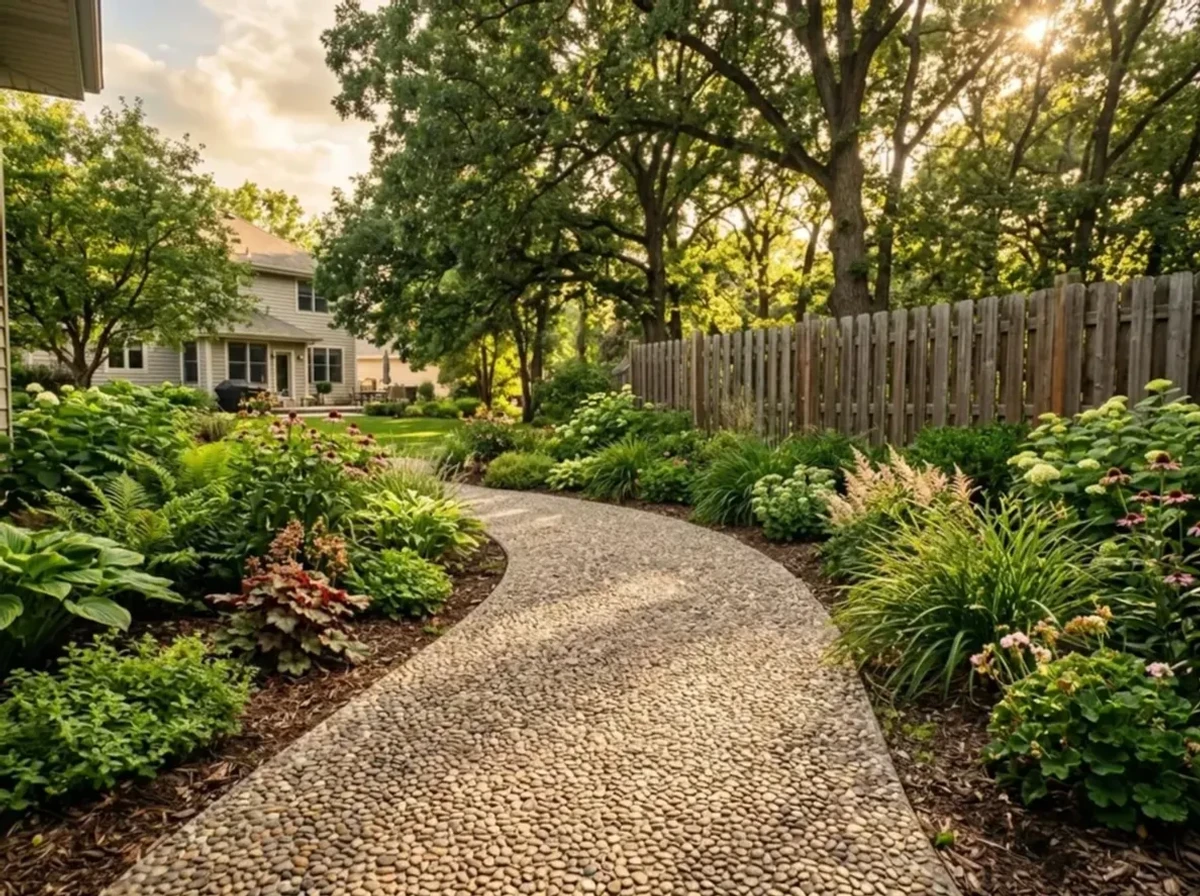
Exposed aggregate reveals the natural stone within the concrete mix, creating a textured, visually interesting surface. This finish offers excellent traction and hides minor wear well.
- Natural stone texture with built-in slip resistance
- Hides minor surface wear and dirt
- Complements natural landscaping and garden areas
- Durable finish that improves with age
Where Concrete Walkways Work Hardest
Front Entry Walkways
The path from your driveway or street to your front door sets the tone for your entire property. A properly sized and finished concrete walkway — whether stamped, colored, or clean broom-finish — gives visitors a clear, stable path and adds real curb appeal.
Garden Paths
Garden paths need to handle foot traffic, wheelbarrow loads, and constant exposure to irrigation and rain without becoming slippery. Exposed aggregate and light broom finishes work well here because they drain quickly and provide grip even when wet.
Side Yard Walkways
Side yards are the workhorses of a property — the route you take to haul bins, move equipment, or access the backyard. These walkways don't need to be decorative, but they do need to be wide enough, properly graded, and durable.
Connecting Walkways
If you've been walking across bare dirt or stepping stones between your house and a detached garage or shed, a poured concrete walkway solves the mud, ice, and tripping problems permanently.
Commercial Sidewalks
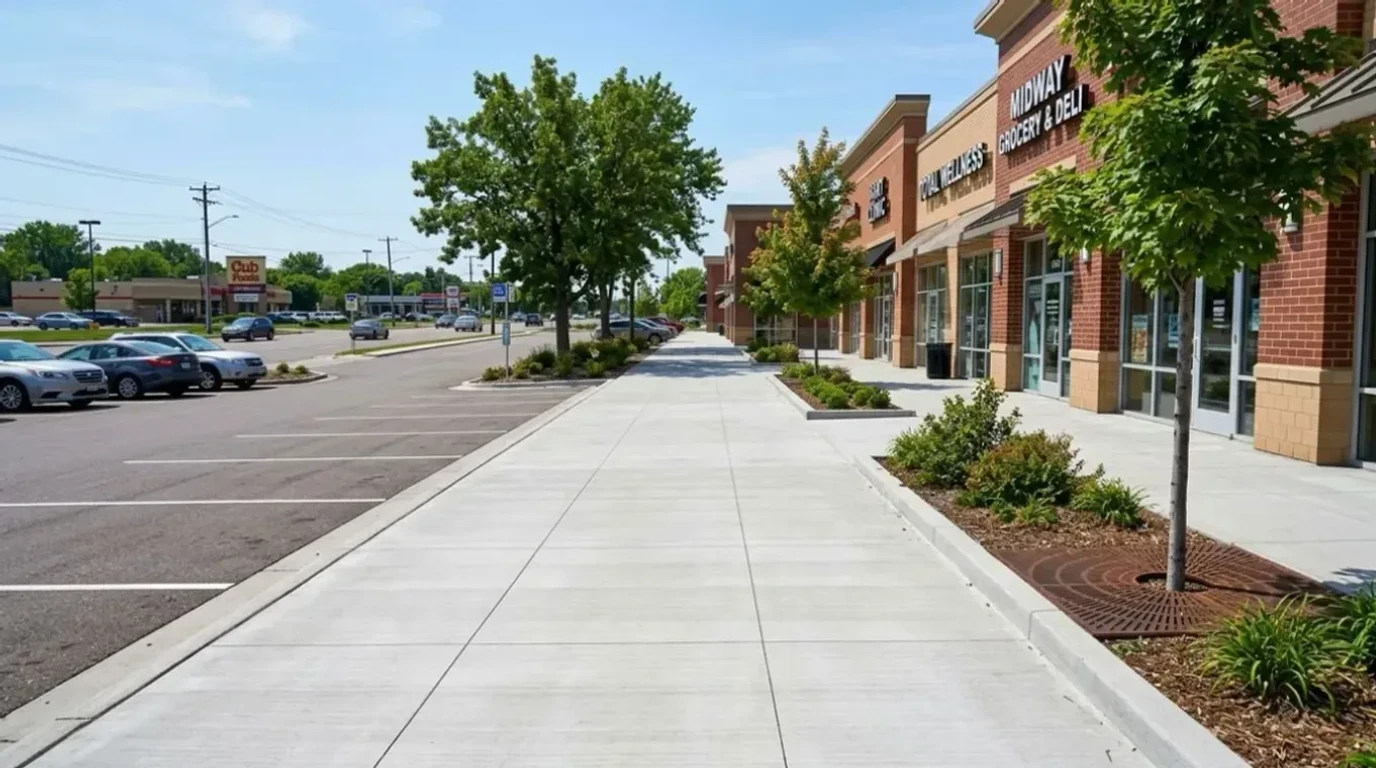
Businesses, churches, and HOA common areas in the Twin Cities metro need sidewalks that meet code, handle heavy foot traffic, and remain safe in winter. ADA-compliant slopes, proper joint spacing, and durable finishes.
Walkway Projects Across the Twin Cities
Concrete vs. Pavers vs. Flagstone
| Feature | Concrete | Pavers | Flagstone |
|---|---|---|---|
| Installed Cost | $$ | $$$ | $$$$ |
| Freeze-Thaw Durability | Excellent | Good | Fair |
| Maintenance | Seal every 2-3 years | Re-level & re-sand | Re-point mortar joints |
| Slip Resistance | High | Moderate | Low to moderate |
| Installation Time | 1-2 days | 3-5 days | 3-7 days |
| Longevity in MN | 25-30+ years | 15-25 years | 10-20 years |
| Snow Removal | Easy — flat surface | Moderate | Difficult |
For most Twin Cities homeowners, poured concrete offers the best combination of durability, cost, and winter performance. If you want the look of natural stone without the upkeep, stamped concrete closes that gap.
From Estimate to Finished Walkway
Free On-Site Estimate
Derek visits your property to assess the scope, discuss finish options, and provide a clear, written quote — typically within 24 hours.
Excavation & Subgrade Prep
Existing material is removed, the subgrade is compacted (critical in Minnesota clay soils), and a gravel base is installed for proper drainage.
Form Setting & Reinforcement
Forms are set to the correct grade and pitch for drainage. Reinforcement is placed to ensure long-term structural integrity.
Pour, Finish & Seal
Air-entrained concrete is poured, finished to your selected style (broom, stamped, colored, or exposed aggregate), and sealed for lasting protection.
Keeping Your Concrete Walkway in Shape
Concrete walkways in Minnesota take a beating. A few simple maintenance steps keep the surface protected and looking good for decades.
Seal Every 2-3 Years
A quality acrylic or penetrating sealer blocks moisture from entering the concrete's pore structure. Reseal in late spring or early fall when temperatures are between 50-80°F.
Limit De-Icing Salt
Rock salt accelerates surface deterioration. Use sand for traction instead, or switch to calcium chloride or magnesium chloride products. Avoid any de-icer in the first year.
Address Cracks Early
Cracks wider than 1/4 inch should be filled with flexible concrete caulk before winter. Water that enters a crack and freezes will widen it rapidly.
Keep Edges Clear
Soil and mulch against walkway edges hold moisture and cause faster deterioration. Keep a 1-2 inch gap between landscaping material and the concrete edge.
Why Twin Cities Homeowners Call Jensen for Walkways
Derek Jensen Is On Your Job Site
Every walkway pour is personally overseen by Derek Jensen. The person who quoted your project is the same person finishing your concrete. No subcontractors, no crew you've never met.
25 Years of Minnesota-Specific Experience
Air entrainment ratios, subgrade compaction in clay soils, joint spacing for 60-degree temperature swings — these details are second nature after 25 years of pouring in the Twin Cities west metro.
Your Property Stays Clean
A concrete pour involves heavy equipment, material deliveries, and excavation. Derek's crew protects your lawn, landscaping, and driveway during the pour and cleans up after.
Right-Sized Crew, Focused Attention
A 5-person crew means your walkway project gets direct attention from start to finish. No juggling between three job sites in one day.
Common Questions About Concrete Sidewalks & Walkways
How thick should a residential concrete walkway be?
Standard residential walkways are poured at 4 inches thick on a compacted subgrade. If the walkway will carry any vehicle traffic — even occasional — we increase to 5-6 inches and add reinforcement. Every walkway we pour also includes a compacted gravel base, which is critical in Minnesota's clay soils to prevent settling and cracking.
How do you prevent walkway cracking in Minnesota winters?
Three things prevent most cracking: proper subgrade compaction, control joints cut at the right intervals (typically every 4-5 feet on a walkway), and air-entrained concrete. Air entrainment creates microscopic bubbles inside the concrete that give expanding ice room to grow without cracking the slab. We use a 6% air content mix, which is standard for Minnesota exterior concrete.
Are there ADA requirements for residential walkways?
Private residential walkways don't fall under ADA requirements, but if you're building a walkway for a commercial property, church, or HOA common area, ADA guidelines apply. That includes a minimum 36-inch clear width (48 inches preferred), a maximum 5% running slope, a maximum 2% cross slope, and detectable warning surfaces at curb ramps.
How long do stamped concrete walkways last compared to plain concrete?
A stamped walkway poured with the same mix design and thickness as a plain walkway will last just as long — 25-30+ years in Minnesota conditions. The stamping process doesn't weaken the concrete. The key difference is maintenance: stamped walkways benefit from resealing every 2-3 years to keep the color and texture sharp.
What's the timeline from estimate to finished walkway?
After you approve the estimate, most residential walkway projects are scheduled within 2-4 weeks during the season (April through November). The actual pour typically takes 1 day for a standard front entry or connecting walkway. Larger projects or stamped walkways may extend to 2 days. You can walk on a new walkway in 24-48 hours.
Can you match a new walkway to my existing concrete patio or driveway?
Matching existing concrete color exactly is difficult because concrete changes color as it ages and weathers. What we can do is match the finish style (broom direction, stamp pattern) and get the color close using integral color or stain. After a season of weathering, new and old concrete tend to blend more naturally.
Serving the Twin Cities West Metro
Jensen Decorative Concrete pours sidewalks and walkways across the Twin Cities western suburbs and Lake Minnetonka area.
A Walkway That Handles Minnesota — and Looks Good Doing It
Your front entry, garden path, or connecting walkway should be flat, stable, and built for a climate that tests concrete harder than most. Let's talk about your project.
Get Your Free EstimateQuality decorative concrete is just a call away.