
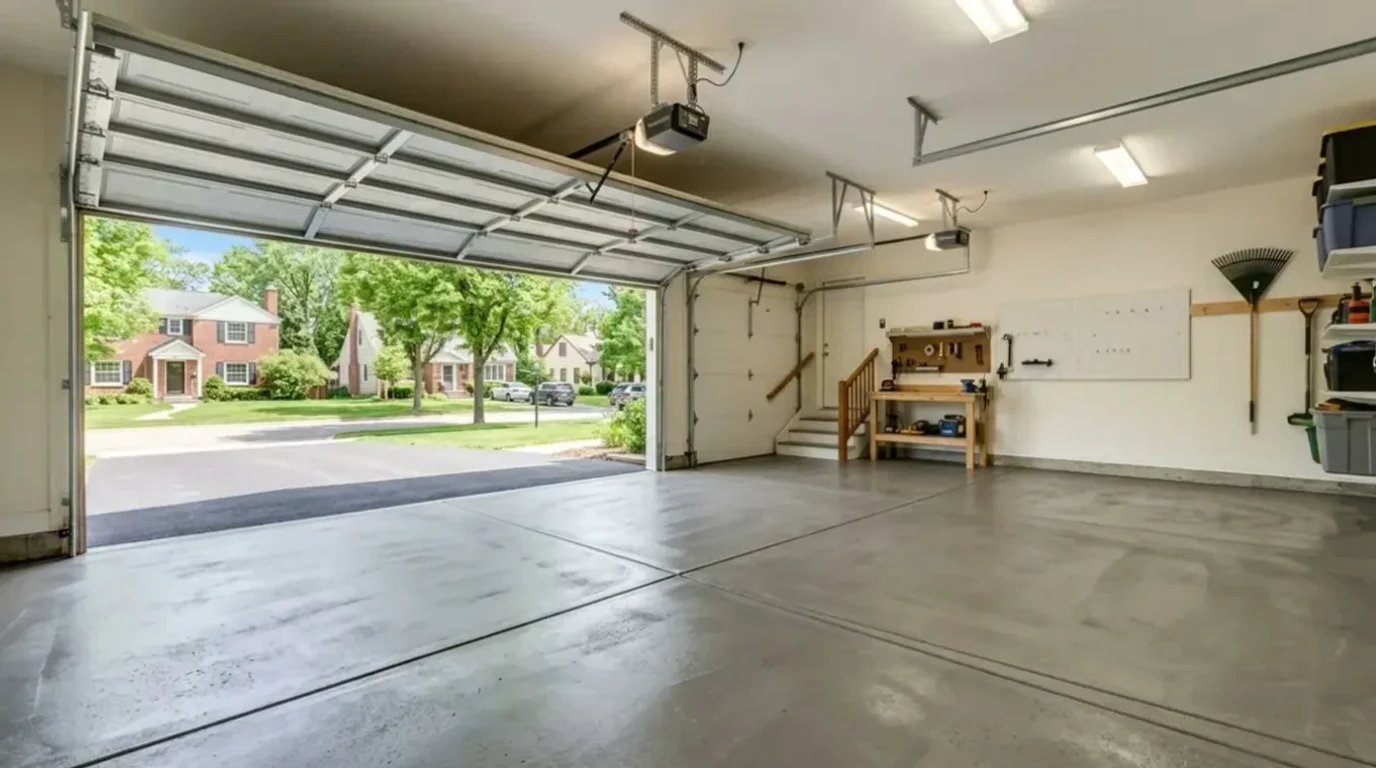
Garage Floor Replacement and New Pours in the Twin Cities
Salt, oil, freeze-thaw cycles, and 6,000 pounds of vehicle sitting on it every day — garage floors in Minnesota take more abuse than any other slab in your home. Jensen Decorative Concrete pours and replaces garage floors built to handle that punishment.
New Garage Floors and Full Replacements Done Right
A garage floor is a concrete slab poured inside your garage structure — either during new construction or as a replacement for a damaged existing floor. Unlike a driveway or patio, a garage floor has to handle vehicle weight, resist salt and chemical exposure, and drain properly inside an enclosed space.
For new pours, we excavate to proper depth, compact the subgrade, add a gravel base, place reinforcement, and pour at 5–6 inches thick. The floor is pitched toward the garage door so snowmelt and water drain out rather than pooling inside.
Garage Floor Finishes for Function and Durability
Garage floors don't need to be decorative — but they do need the right finish for how you use the space.
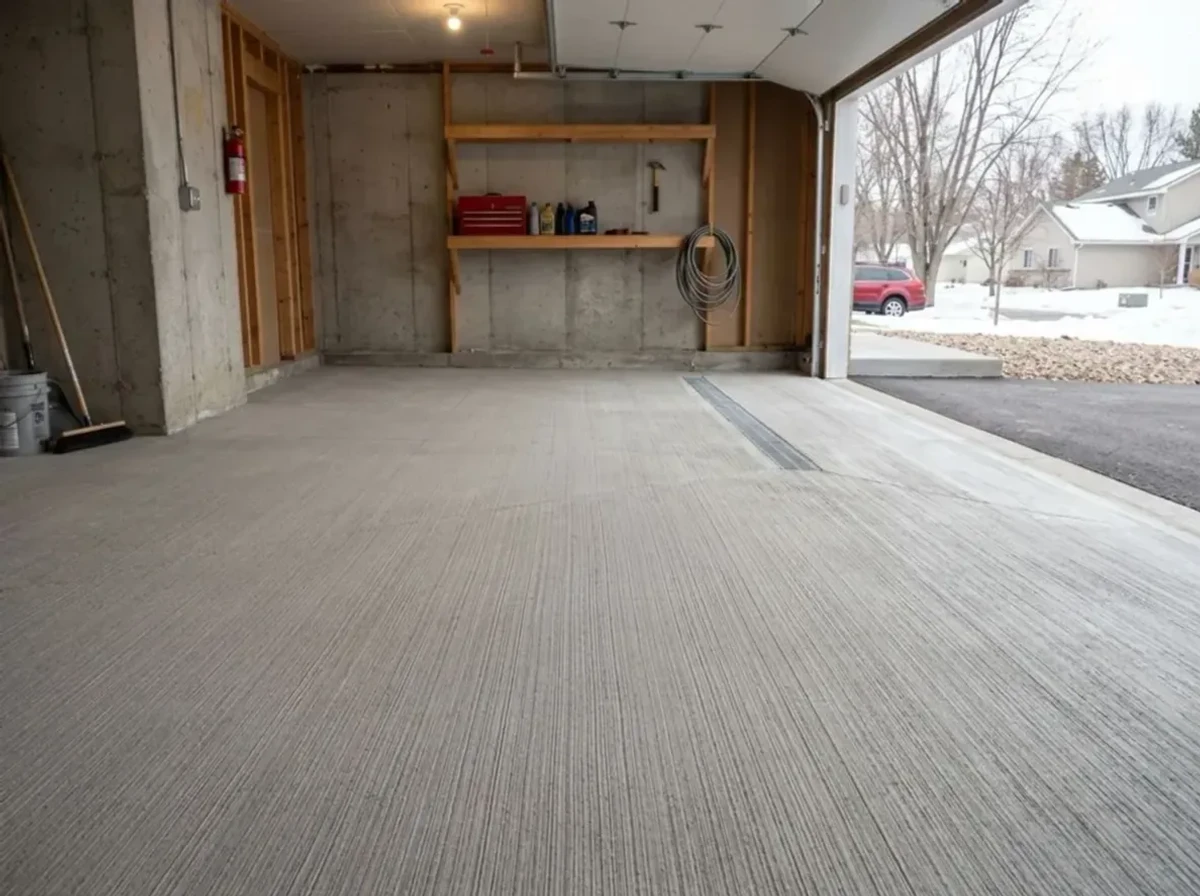
Broom Finish
A broom finish provides the best traction in a garage where wet shoes, snowmelt, and oil spills are a daily reality. The textured surface gives tires grip and prevents slipping when you’re walking on a wet floor in winter. This is the most common and most practical garage floor finish in Minnesota.
- Maximum traction on wet surfaces
- Best choice for garages in Minnesota’s climate
- Hides tire marks and minor stains well
- Most cost-effective option
Smooth (Steel Trowel) Finish
A smooth-troweled garage floor creates a hard, dense surface that’s the easiest to sweep and clean. This finish works best in garages used primarily as workshops, storage spaces, or hobby areas where the floor won’t regularly be wet from vehicle runoff.
- Easiest surface to clean and maintain
- Hard, dense finish resists abrasion
- Best for workshop and storage use
- Can be slippery when wet — not ideal for daily vehicle parking in winter
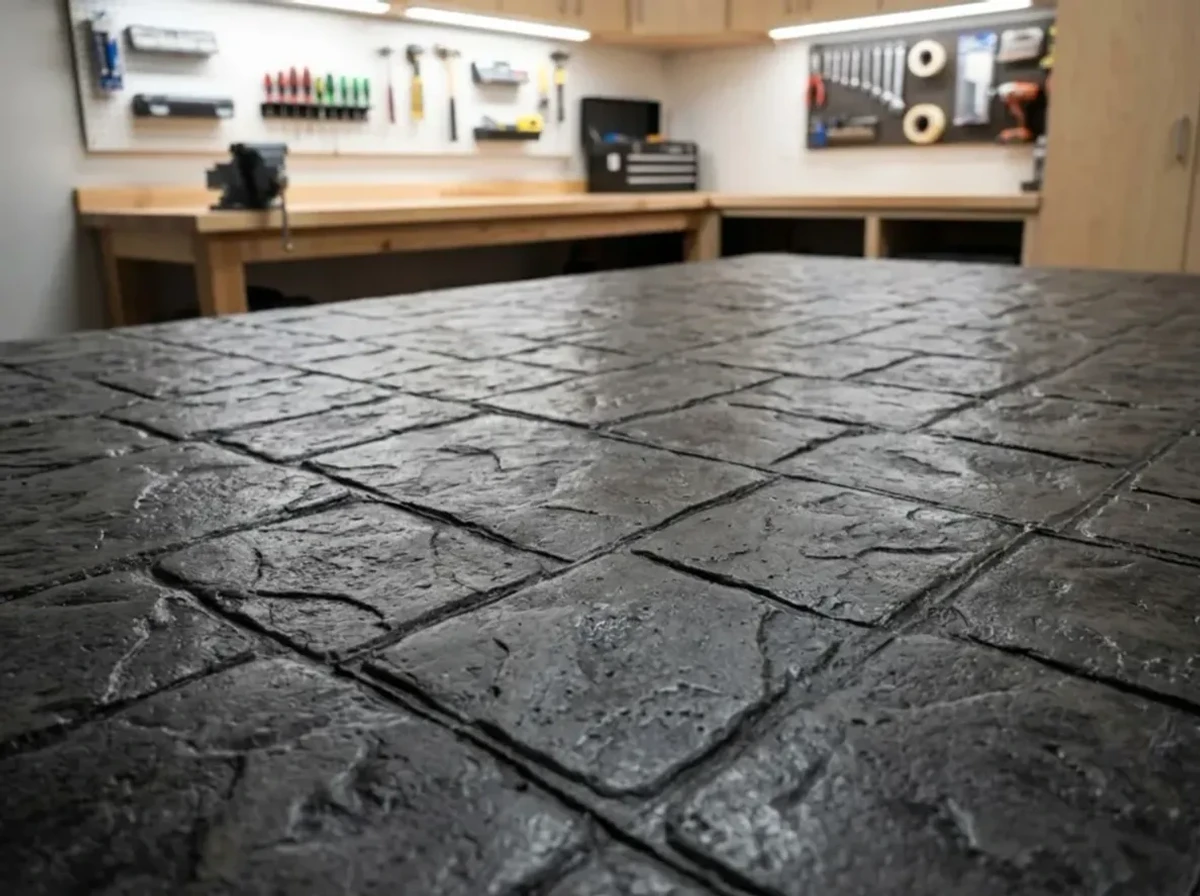
Light Stamped Finish
A light stamp pattern — such as a subtle stone or tile texture — upgrades the appearance of a garage floor without compromising function. Popular with homeowners who use their garage as an extension of living space.
- Upgraded appearance for visible or multi-use garages
- Same structural build as standard garage floors
- Adds texture for moderate grip
- Pairs with integral color for a custom look
Colored Concrete
Integral color adds a consistent hue throughout the slab — not just the surface. Popular color choices for garage floors are medium gray, charcoal, and tan. Colored concrete hides tire marks and minor stains better than plain gray.
- Color runs through the full slab depth
- Hides tire marks and stains better than plain gray
- Won’t peel, chip, or flake like surface coatings
- Available in multiple tones to match your preference
Garage Floor Projects
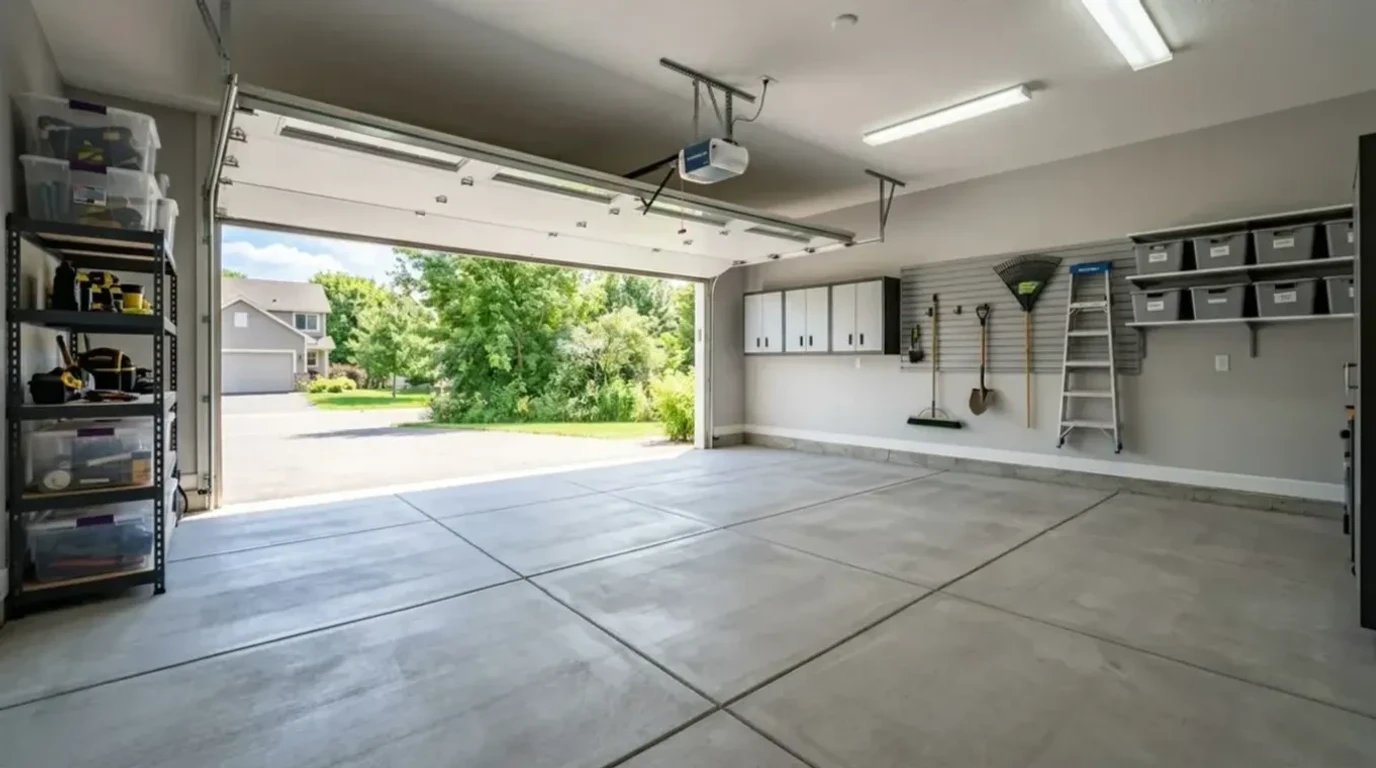
From single-car replacements to full double-car pours, see the quality we deliver on every garage floor project.
Garage Floor Solutions for Every Setup
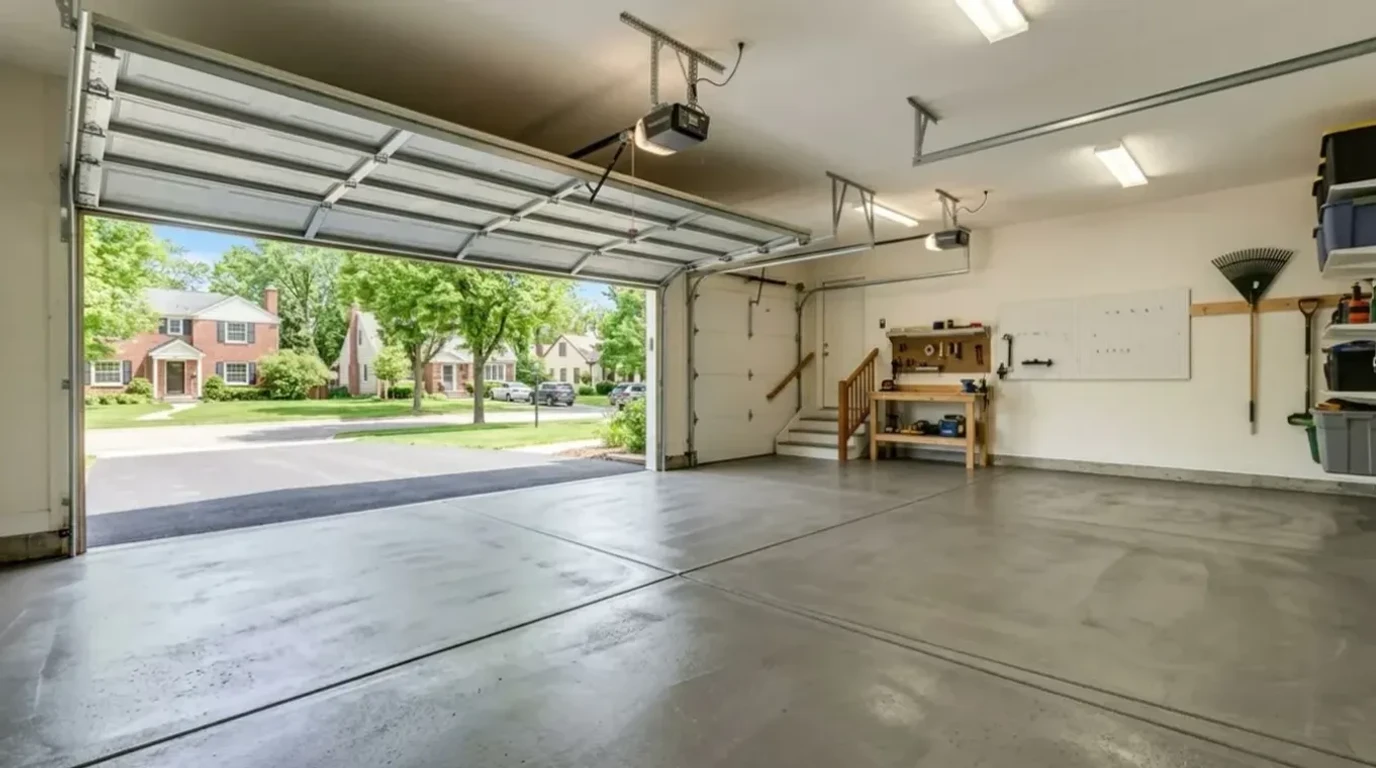
Single-Car Garage Floors
A single-car garage floor is typically 12 by 20 feet or 12 by 24 feet. Even in a smaller footprint, the same fundamentals apply: 5-inch minimum thickness, reinforcement for vehicle weight, compacted subgrade, and drainage slope toward the door. Older single-car garages in Bloomington, Edina, and Hopkins often have original floors that have deteriorated after 40–50 years and need full replacement.
Double-Car Garage Floors
Double-car garages (typically 20 by 22 feet to 24 by 24 feet) carry more weight and handle more traffic than single-car setups. The larger footprint also means more control joints are needed to manage cracking. We place joints at intervals calculated for the slab dimensions.
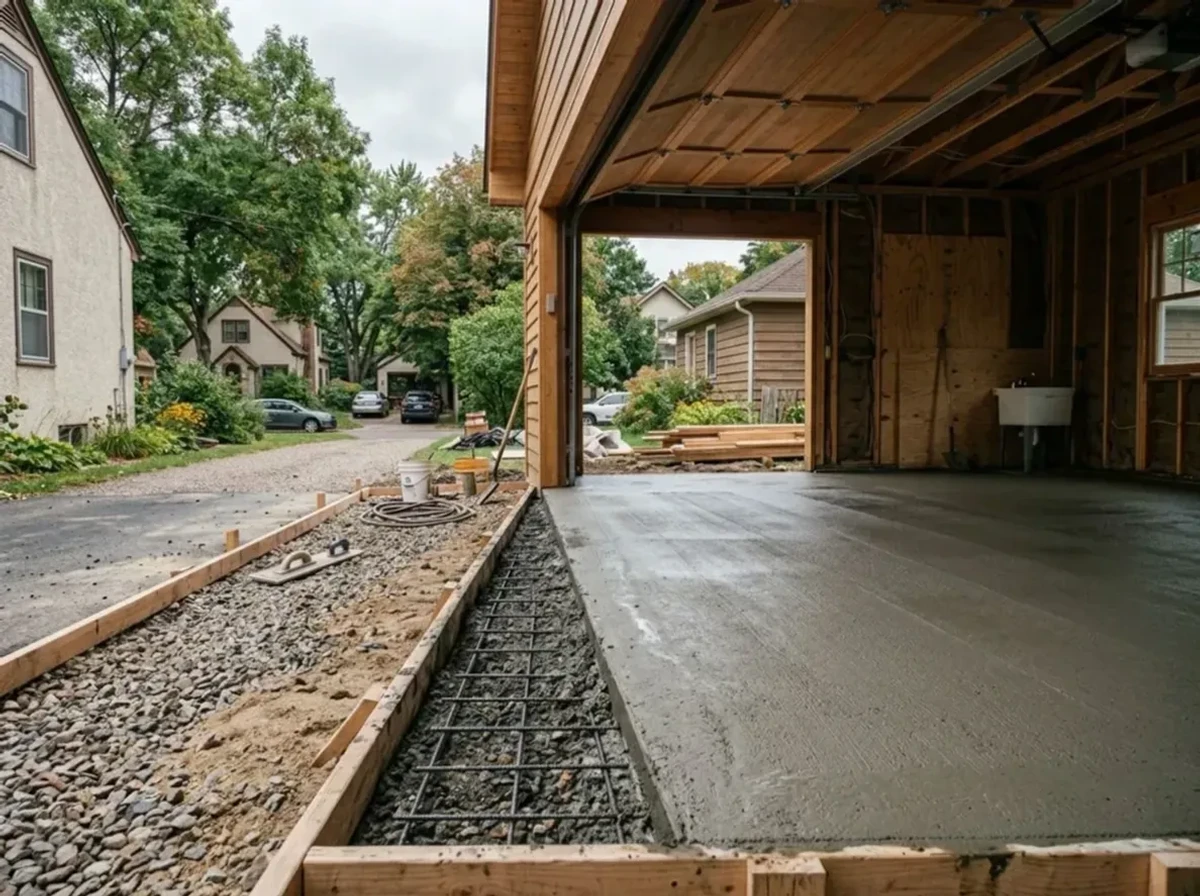
Detached Garage Floors
Detached garages — common in older neighborhoods across the Twin Cities and on rural properties in Carver and Scott counties — often sit on original slabs that have settled, heaved, or cracked beyond repair. Replacing a detached garage floor involves removing the old slab, addressing subgrade problems, and pouring new.
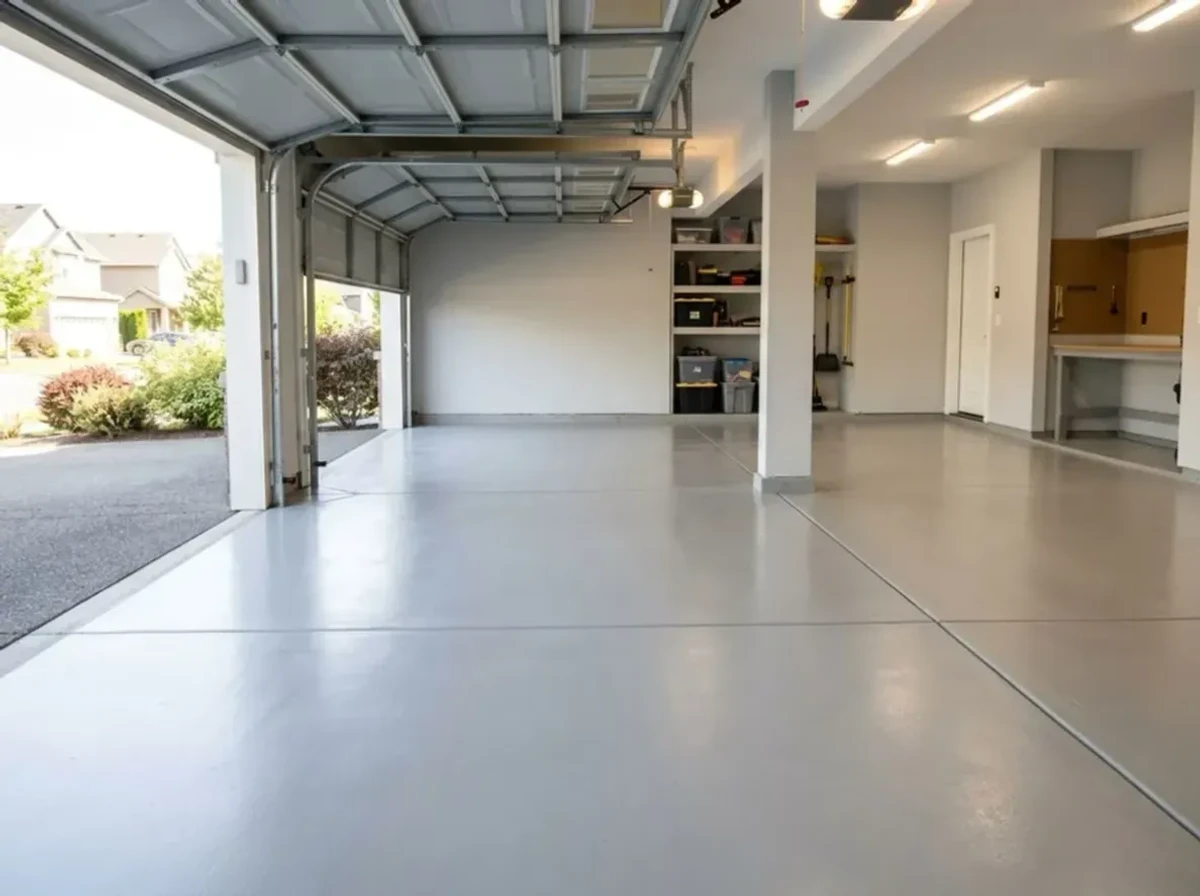
Workshop Floors
If your garage doubles as a workshop, the floor needs to handle more than just parked cars. Tool drops, heavy workbench loads, jack stands, and chemical spills are standard. A smooth trowel finish is easier to keep clean, and we can add reinforcement where you plan to place heavy equipment.
Concrete vs. Epoxy Coating vs. Interlocking Tiles
Epoxy coatings and interlocking tiles are cosmetic solutions that go over an existing concrete floor — they don't replace a damaged slab.
| Feature | Concrete Garage Floor | Epoxy Coating | Interlocking Tiles |
|---|---|---|---|
| Durability | 25–30+ years | 5–10 years before reapplication | 10–15 years |
| Installation | 1–2 days | 2–3 days | 1 day (DIY-friendly) |
| Salt/Chemical Resistance | Good when sealed | Excellent | Moderate |
| Freeze-Thaw Performance | Excellent with air entrainment | Good | Fair |
| Structural Repair | Replaces damaged slab entirely | Cosmetic only | Cosmetic only |
| Maintenance | Seal every 2–3 years | Recoat every 5–10 years | Replace damaged tiles individually |
Summary: If your garage floor is structurally sound but looks worn, a coating or tile system can refresh it. If the slab is cracked, heaved, settling, or spalling, you need a new concrete pour. A properly poured and sealed concrete garage floor handles everything Minnesota throws at it for decades.
Garage Floor Care for Minnesota Conditions
Garage floors in Minnesota deal with road salt, oil drips, snowmelt puddles, and constant freeze-thaw cycling. These maintenance steps keep your floor performing.
Rinse Salt Off Regularly in Winter
Road salt and magnesium chloride de-icers accelerate concrete surface damage, especially in the first 1–2 winters after a pour. Rinsing your garage floor every 2–3 weeks during salt season washes off the chemical residue before it can attack the sealer and concrete surface.
Seal the Floor Every 2–3 Years
A penetrating or acrylic sealer blocks moisture and chemicals from entering the concrete. Apply in late spring after salt season ends and temperatures are above 50°F. The sealer also makes oil stain cleanup easier.
Clean Oil Spills Promptly
Oil that soaks into unsealed concrete creates a permanent dark stain and weakens the surface over time. On a sealed floor, oil sits on the surface and wipes up easily. The longer oil sits, the deeper it penetrates.
Monitor Cracks Each Spring
After each winter, walk your garage floor and check for new cracks or widening of existing ones. Cracks wider than 1/4 inch should be filled with a flexible concrete crack filler before the next winter.
Why Homeowners Replace Their Garage Floors With Jensen
Full Removal and Rebuild, Not Patch Jobs
If your garage floor needs replacement, we remove the existing slab completely, fix the subgrade, and pour new. No overlays on a failing slab, no skim coats over structural problems.
Derek Manages the Whole Project
A garage floor replacement involves demolition, hauling, subgrade work, and the pour itself. Derek Jensen is on site through all of it. The subgrade compaction gets checked, reinforcement verified, and the finish done right.
25 Years of Solving Minnesota Garage Floor Problems
Frost heave, clay soil settling, salt damage, poor original drainage — we’ve seen every way a garage floor can fail in this climate. We identify why the original floor failed and build the new one to avoid the same problems.
We Handle Everything, Including Removal
Some concrete companies pour new but don’t remove old. We handle the full scope — sawcutting, breaking out the existing slab, hauling debris, subgrade preparation, and the new pour. One crew, one point of contact, one estimate.
How a Garage Floor Replacement Works
Assessment
We evaluate your existing floor, identify subgrade issues, and provide a detailed estimate for the replacement.
Removal
Sawcutting and breaking out the existing slab, hauling all debris off-site, and exposing the subgrade.
Preparation
Compact the subgrade, add gravel base, place reinforcement (rebar or wire mesh), and set forms with proper slope.
Pour & Finish
Pour at 5–6 inches thick, finish to your chosen texture, cut control joints, and apply sealer for protection.
Garage Floor Questions We Answer Most
How do I know if my garage floor needs replacement versus repair?
Can individual cracked sections be replaced, or does the whole floor need to come out?
How thick should a garage floor be?
How do I prevent salt damage to my garage floor?
What’s the right drainage slope for a garage floor?
How long does a garage floor replacement take?
A Garage Floor Built for What Minnesota Puts It Through
Road salt, oil, snowmelt, 6,000-pound vehicles, and 60-degree temperature swings. If your garage floor is cracking, heaving, or flaking, let Jensen Decorative Concrete get yours done right.
Get Your Free EstimateQuality decorative concrete is just a call away.